Hrmtaila: Meaning, Uses, Benefits, Risks, and the Future of AI in Human Resource Management
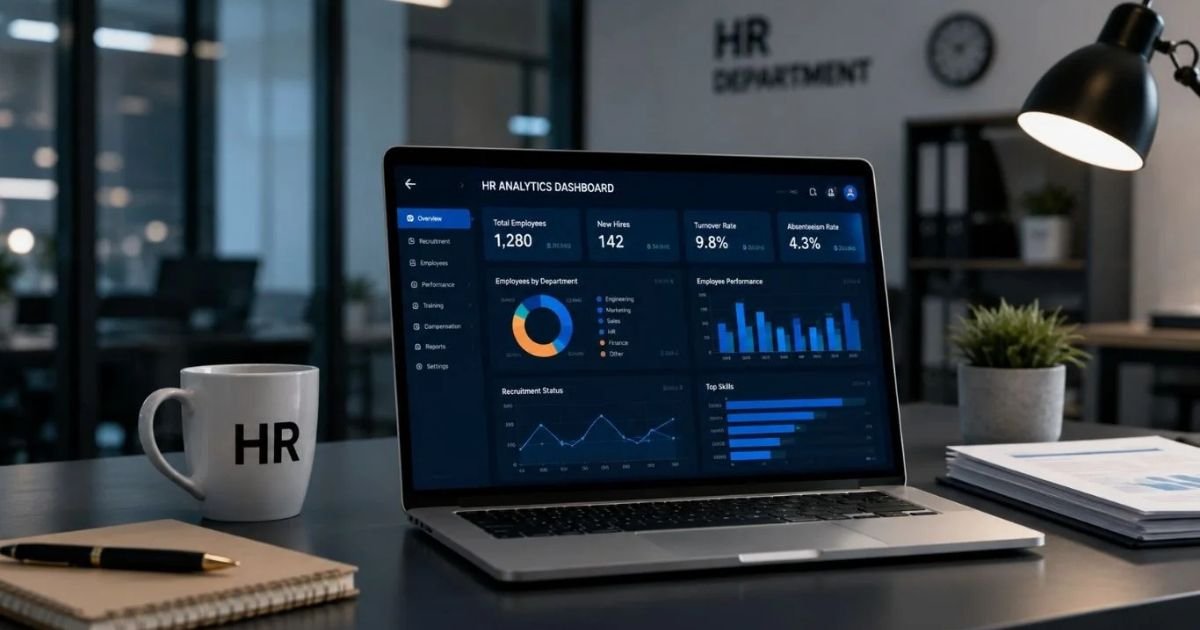
Hrmtaila is an emerging online term associated with artificial intelligence, human resource management, workplace automation, and digital employee services. People searching for Hrmtaila often want to understand what the term means, whether it refers to a real software platform, and how it connects with modern business technology.
The topic is particularly relevant as organizations in the United States, India, and other markets explore digital tools to simplify recruitment, manage employee records, improve workforce planning, and reduce repetitive administrative work. Artificial intelligence is creating new possibilities for human resources, but understanding these technologies also requires distinguishing established capabilities from unverified claims.
At present, Hrmtaila does not have a clearly established official definition or a verified commercial identity supported by widely available primary documentation. It is therefore more accurate to discuss it as an emerging term associated with AI-assisted human resource management rather than assume it represents a specific software product with confirmed features.
This guide explains Hrmtaila in simple language, examines its possible meaning and applications, explores the relationship between AI and human resources, and identifies the practical questions businesses should consider before adopting any technology associated with the term.
What Is Hrmtaila?
Hrmtaila is an emerging keyword commonly associated online with artificial intelligence and human resource management. In this context, it represents the broader idea of using intelligent digital systems to organize employee information, support recruitment, automate routine HR tasks, and improve workforce-related decisions.
Human resource departments manage a wide range of responsibilities. These include hiring employees, organizing interviews, maintaining records, handling onboarding, tracking attendance, coordinating training, supporting payroll administration, and answering workplace questions.
When these activities depend entirely on manual processes, they can consume significant time and create unnecessary administrative pressure. Digital HR systems can organize information, while automation can complete suitable repetitive tasks. AI can add capabilities such as summarizing information, identifying patterns, and generating responses to common questions.
Hrmtaila is associated with this wider technological direction. However, these applications belong to the broader field of HR technology and should not automatically be treated as verified features of a dedicated Hrmtaila product.
The simplest explanation is that Hrmtaila is an emerging term connected with intelligent human resource management. Its exact origin, official definition, and possible relationship with a specific company or software platform remain unclear.
What Does Hrmtaila Mean?
The complete meaning of Hrmtaila has not been established through a clearly documented official definition. The first three letters, HRM, correspond to the widely used abbreviation for Human Resource Management. This refers to the business function responsible for managing employees and supporting an organization’s workforce.
The remaining part of the word, taila, does not have a confirmed explanation from an identifiable creator or authoritative organization.
Some online descriptions interpret Hrmtaila as a concept related to intelligent, automated, or AI-supported HR operations. That interpretation fits the context in which the term is being discussed, but it should not be presented as a proven explanation of the word’s origin.
A useful distinction is the difference between a term’s current online usage and its original intended meaning.
For example, an unfamiliar term may begin as a product name, an internal business label, a newly created expression, a variation of another keyword, or a phrase introduced through online publishing. Without reliable information about its origin, it is not possible to determine which explanation applies to Hrmtaila.
For readers searching for the meaning of Hrmtaila, the most practical approach is to understand its current association with AI-powered HR management while recognizing that its precise definition remains unconfirmed.
Is Hrmtaila a Real Software Platform?
One of the most important questions surrounding Hrmtaila is whether it refers to an actual software product.
Currently available public information does not establish a clearly verified commercial HR platform operating under this name with an authoritative product history, identifiable developer, official feature documentation, and confirmed customer information.
This does not prove that no private project, emerging brand, or similarly named service exists. It means that the available evidence is insufficient to confirm a particular product identity.
That distinction matters because articles about emerging technology terms sometimes describe possible applications as if they were already available in a finished product. A discussion of automated recruitment, for example, does not prove that a product associated with an unfamiliar name can screen candidates or manage hiring.
Before treating Hrmtaila as a software service, readers should look for several forms of evidence:
- Official product information: Documentation explaining what the service does and who operates it.
- Identifiable ownership: A verifiable company or individual responsible for the product.
- Feature documentation: Clear explanations of available functions and technical requirements.
- Privacy information: Policies explaining how employee information is collected, processed, stored, and protected.
- Customer support: Verifiable contact details and information about how users can obtain assistance.
- Transparent commercial terms: Clear pricing, subscription conditions, or other applicable costs.
- Independent verification: Credible evidence that supports important claims about the product.
Until such information is available, Hrmtaila should not be described as a confirmed HR software platform. Understanding the wider HR technology landscape provides a more reliable way to evaluate the term.
How Does Hrmtaila Connect With Artificial Intelligence?
Artificial intelligence enables computer systems to perform certain tasks that normally require human interpretation, pattern recognition, or language processing. In human resources, these capabilities can support administrative work and help professionals understand workforce information.
The connection between Hrmtaila and AI is best understood through established applications of intelligent HR technology.
Automating Repetitive Administrative Tasks
HR teams frequently handle repetitive activities such as updating records, preparing standard documents, organizing requests, and sending reminders. Workflow automation can reduce the number of manual steps required to complete these tasks.
For example, a digital workflow may notify a manager when an employee submits a leave request. Another workflow may remind a new employee to complete required forms before their first day.
AI can complement these processes by interpreting certain requests, summarizing information, or helping employees locate relevant answers.
Organizing Workforce Information
Employee information can be spread across applications, spreadsheets, documents, and internal databases. Connected HR systems can help organizations maintain consistent records and reduce unnecessary duplication.
AI-supported tools may also summarize selected information or identify patterns in workforce data. These capabilities depend on the quality of the available data and the permissions assigned to the system.
Supporting Better Decisions
HR professionals regularly make decisions involving recruitment, training, staffing, and employee development. Analytics tools can help them compare information, identify trends, and investigate potential problems.
However, data analysis does not guarantee that a conclusion is correct. Human review remains essential, particularly when a decision affects employment, compensation, promotion, or an individual’s professional opportunities.
Hrmtaila can therefore be understood in relation to the broader movement toward more connected, automated, and data-informed human resource management.
Main Areas Where AI Can Support Human Resource Management
AI can contribute to several stages of the employee lifecycle. The following examples describe established categories of HR technology, not a verified list of Hrmtaila product features.
Recruitment and Candidate Management
Recruitment involves advertising vacancies, reviewing applications, communicating with candidates, scheduling interviews, and coordinating hiring decisions.
AI-supported recruitment tools can assist with tasks such as organizing applications, identifying relevant skills, preparing job descriptions, and drafting candidate communications.
For example, a recruiter managing a large number of applications may use software to organize candidates according to relevant qualifications. The recruiter can then examine the applications more closely and determine which candidates should proceed.
These tools should not be allowed to make consequential hiring decisions without appropriate oversight. Automated systems may misunderstand qualifications, overlook transferable skills, or reproduce unfair patterns found in historical hiring data.
Employee Onboarding
Onboarding helps new employees understand their responsibilities, workplace policies, team structure, and essential procedures.
Digital onboarding systems can organize documents, assign training, collect required information, and remind employees about unfinished tasks.
AI assistants may also answer common questions about workplace procedures or direct employees to relevant internal resources.
A well-designed onboarding process gives employees clear instructions while allowing HR staff to focus on individual needs that require personal attention.
Attendance and Leave Administration
Attendance and leave management involve tracking working hours, recording absences, processing requests, and maintaining accurate schedules.
Digital HR systems can simplify these activities by bringing related information into a central workflow. Automation can send reminders, route requests to the appropriate manager, and update records after approval.
AI may help summarize scheduling information or identify unusual patterns that deserve review. Such patterns should not automatically be treated as evidence of misconduct or poor performance.
Payroll Administration
Payroll requires accurate information about salaries, working hours, approved leave, overtime, deductions, and applicable taxes.
HR and payroll software can organize this information and reduce repeated data entry. Automated checks may flag missing records, inconsistent values, or entries that require confirmation.
Nevertheless, payroll accuracy depends on correct data, properly configured rules, and appropriate human review. AI should not replace the financial controls and legal checks necessary to pay employees correctly.
Employee Training and Development
Employee development helps workers build skills, improve performance, and prepare for future responsibilities.
Learning management systems can organize courses, record progress, and help managers understand which training activities employees have completed.
AI-supported tools may suggest learning materials based on a person’s role, stated goals, or identified skill gaps. These recommendations should remain relevant to the employee’s actual responsibilities and professional interests.
The goal is to make development more accessible rather than automatically label employees according to incomplete assessments.
Performance Management
Performance management includes setting objectives, reviewing progress, providing feedback, and identifying opportunities for improvement.
Technology can help managers organize goals, record agreed milestones, and prepare for review meetings. Analytics may reveal patterns that encourage further investigation.
However, an employee’s performance cannot always be measured through numerical indicators. Teamwork, creativity, mentoring, judgment, and difficult projects may require careful human assessment.
Digital tools should support meaningful conversations instead of replacing them with automated scores.
Employee Questions and Internal Support
Employees often need quick answers about leave policies, benefits, schedules, training, company procedures, or administrative forms.
An internal HR chatbot can provide approved information at any time when the underlying system is available. It can also direct more complicated requests to a human representative.
This can reduce repetitive enquiries and help employees find information without waiting for a response to every basic question.
Sensitive complaints, disputes, accommodation requests, and complex employment matters still require appropriate human attention.
What Are the Potential Benefits of Hrmtaila?
Because Hrmtaila itself is not established as a verified product, its specific benefits cannot be confirmed. The following advantages relate to the broader AI-assisted HR approach with which the term is associated.
Greater Administrative Efficiency
Automation can reduce time spent on repeated data entry, reminders, document handling, and routine communication.
When employees and managers can complete standard tasks through organized digital workflows, HR professionals may have more time for recruitment strategy, employee relations, and workforce development.
The improvement depends on the process being automated. A poorly designed workflow can create extra work instead of reducing it.
Better Organization of Employee Records
Centralized digital records can make employee information easier to maintain and retrieve.
When access permissions and update procedures are configured properly, authorized staff can work with more consistent information. This can reduce the confusion that occurs when multiple copies of a record contain different details.
Centralization also creates responsibility. Organizations must protect the information they collect and prevent unnecessary access.
Faster Access to Routine Information
Employees may need information outside standard office hours or when HR representatives are occupied with other responsibilities.
A well-configured digital assistant can provide approved answers to common questions and explain where employees can find the appropriate forms or procedures.
This is particularly useful for organizations with multiple locations, distributed teams, or employees working different shifts.
More Informed Workforce Planning
Workforce analytics can help businesses examine recruitment needs, staff turnover, training requirements, attendance trends, and changing skill demands.
For example, a company may discover that several teams need similar technical training. It can use that information to plan development activities more effectively.
Analytics can reveal possible trends, but they do not explain every cause. Managers should investigate the underlying circumstances before taking action.
Improved Process Consistency
When HR processes rely on written procedures and properly configured systems, employees can receive more consistent instructions.
A standardized onboarding workflow, for instance, can help ensure that new hires receive the required documents and training.
Consistency should not mean treating every situation identically. Exceptions, individual circumstances, and legal requirements may require a different response.
Support for Business Growth
Growing organizations often experience increasing demands on recruitment, payroll, training, and employee support.
Digital systems can help manage a larger volume of routine work without requiring every activity to be handled manually. This can improve operational capacity when the technology is suitable for the organization’s size and needs.
Businesses should still evaluate implementation costs, employee adoption, data security, and long-term maintenance before investing in a new system.
What Are the Risks and Limitations of AI in HR?
AI can improve selected HR processes, but it also introduces risks that organizations need to manage. These concerns are especially important because human resource decisions can affect livelihoods, workplace relationships, and personal privacy.
Data Privacy and Confidentiality
HR departments handle sensitive information, including contact details, employment history, compensation, performance reviews, and sometimes legally protected personal information.
Organizations should understand what data a system collects, where it is stored, who can access it, and whether it is used to train external AI models.
Employees should not be expected to submit confidential information to an unverified service simply because it claims to offer intelligent HR management.
Before introducing any tool, businesses should review its privacy documentation, security controls, data retention rules, and contractual responsibilities.
Algorithmic Bias
AI systems can produce unfair results when their training data, design, or evaluation methods contain biased patterns.
For example, a recruitment model trained on historical hiring decisions may favor profiles resembling previously selected candidates. This could disadvantage qualified applicants whose backgrounds differ from those patterns.
Organizations should test systems for unfair outcomes, review the criteria used in important decisions, and provide appropriate human oversight.
Automated recommendations should never be assumed to be neutral simply because a computer produced them.
Inaccurate or Misleading Results
AI systems can generate incorrect answers, misunderstand instructions, or draw conclusions from incomplete information.
An employee question about benefits, for example, may depend on location, employment status, or the terms of a particular plan. A general AI response may overlook those differences.
Reliable HR systems should use approved information, identify uncertainty, and provide a way to reach a qualified human representative.
Overdependence on Automation
Not every workplace problem can be solved through software.
An employee dealing with a conflict, a manager discussing career development, or an HR professional investigating a complaint may need empathy, contextual understanding, and careful judgment.
If organizations automate too much of the employee experience, they risk making support feel impersonal and difficult to access.
The better approach is to automate suitable administrative work while preserving human involvement where understanding and accountability matter most.
Integration and Implementation Challenges
HR technology often needs to work with existing payroll systems, identity management tools, attendance records, finance applications, and learning platforms.
If these systems cannot exchange information correctly, employees may encounter duplicate records, missing data, or inconsistent reports.
Businesses should evaluate compatibility, migration requirements, staff training, ongoing maintenance, and support arrangements before adopting a new solution.
Unclear Product Claims
An emerging name such as Hrmtaila may appear in online discussions before its identity and meaning are fully documented.
Readers should distinguish between descriptions of a general technology concept and evidence about a specific service. Claims about ownership, pricing, integrations, security certifications, and customer results require verification.
This is not simply a technical issue. It is also a matter of responsible research and informed decision-making.
Hrmtaila and Traditional HR Management: What Is the Difference?
Traditional human resource management relies heavily on people, established procedures, and administrative systems. Digital HR management uses software to organize these activities, while AI-assisted HR management introduces additional capabilities for processing information and supporting selected tasks.
These approaches can overlap. An organization may use traditional HR procedures alongside digital records and automated workflows without introducing AI at all.
| Area | Traditional HR approach | Digital and AI-assisted approach |
| Employee records | Manual updates or basic databases | Centralized records and automated updates |
| Recruitment | Manual application review and coordination | Digital organization and AI-assisted candidate analysis |
| Onboarding | Documents, emails, and personal guidance | Digital checklists, reminders, and possible virtual assistance |
| Employee questions | Direct communication with HR staff | Self-service resources and AI-assisted responses |
| Workforce reporting | Manual compilation of information | Automated reports and analytics |
| Performance reviews | Manager-led assessment and feedback | Digital tracking with possible analytical support |
| Decision-making | Professional judgment and available records | Professional judgment supported by additional data analysis |
| Main concerns | Administrative workload and inconsistent processes | Data privacy, integration, accuracy, bias, and oversight |
The main difference is not that technology replaces human resource professionals. It is that suitable digital tools can help them organize information and complete selected tasks more efficiently.
Hrmtaila is associated with this broader transition, although it has not been established as a separate system with a verified set of capabilities.
How Could Businesses Evaluate an HR Technology Solution?
Organizations interested in AI-assisted HR management should begin with their actual operational problems rather than choosing a system because its name sounds innovative.
Identify the Main Business Problem
A company should first determine which process needs improvement. Common examples include slow recruitment, inconsistent onboarding, repeated employee questions, manual reporting, or difficulties maintaining accurate records.
A clearly defined problem makes it easier to evaluate whether technology will provide a meaningful benefit.
Review Available Features
Businesses should request clear documentation describing the functions a product actually provides.
They should distinguish between features that are currently available, features that require additional configuration, and capabilities described only as future plans.
Marketing language alone is not sufficient evidence that a system can perform a particular task reliably.
Examine Security and Privacy Controls
Organizations should understand how employee data is handled and what protections are available.
Important considerations include access permissions, encryption, authentication, data retention, backup procedures, incident reporting, and the handling of third-party service providers.
The appropriate requirements will depend on the organization, its location, the data it processes, and applicable law.
Test the System Before Wider Adoption
A limited pilot can help determine whether a tool works as expected in real workplace conditions.
For example, a business might test an HR assistant using approved policy documents and a set of common employee questions. Reviewers can assess the accuracy of its answers, identify gaps, and determine when requests should be transferred to a person.
Testing should include difficult questions and potential failure cases, not just demonstrations designed to show successful results.
Measure Meaningful Outcomes
Businesses should establish measurable goals before implementing a system.
Possible measures include the time needed to complete onboarding, the number of unresolved employee enquiries, record accuracy, administrative hours saved, employee satisfaction, and the frequency of incorrect automated responses.
Results should be compared with a reasonable baseline. This helps organizations determine whether the technology is actually improving the process.
Maintain Human Accountability
A company should define who is responsible for monitoring the system, reviewing important recommendations, responding to complaints, and correcting mistakes.
Employees should have a clear way to challenge inaccurate information or request human assistance.
Technology is most useful when responsibility remains clear and the organization can explain how important decisions are made.
Why Is Hrmtaila Relevant in India and the United States?
The interest in AI-assisted HR management is relevant to businesses in both India and the United States, although their operational needs and legal obligations may differ.
Relevance for Indian Businesses
Indian organizations operate across a wide range of industries, including information technology, manufacturing, retail, healthcare, financial services, education, and business process outsourcing.
Many businesses manage large workforces, multiple office locations, varied employee schedules, and substantial recruitment requirements. Digital HR systems can help coordinate employee records, onboarding, training, attendance, and internal communication.
Organizations with employees who speak different languages may also explore multilingual employee support tools, provided the systems can deliver accurate and understandable information.
Businesses should evaluate local data protection obligations, applicable employment requirements, payroll rules, language needs, and existing software compatibility before selecting a solution.
For smaller businesses, the priority may be simpler record management and fewer administrative steps. Larger organizations may need stronger integration, access controls, analytics, and support for complex workforce structures.
Relevance for Businesses in the United States
US employers may use digital HR technology to support hiring, employee benefits administration, onboarding, workforce planning, training, and internal service delivery.
Organizations operating across multiple states may also need to account for differences in employment requirements, tax administration, employee benefits, and recordkeeping responsibilities.
AI-assisted recruitment and employee analytics require particular care because automated decisions can raise concerns involving discrimination, transparency, privacy, and accountability.
Businesses should assess applicable federal, state, and local requirements rather than assume that one technical configuration will meet every legal obligation.
A Shared Goal Across Both Markets
Despite differences in business environments, employers in India and the United States share several common objectives: accurate records, efficient administration, fair treatment, effective recruitment, and a positive employee experience.
Digital HR technology can support these goals when it is implemented carefully.
However, Hrmtaila should not be treated as a verified solution for either market unless reliable product information establishes its identity, capabilities, and suitability.
Read more: Magazineluiza com BR Email Format: Common Patterns, Examples, and Contact Guide
What Is the Future of Hrmtaila?
The future of Hrmtaila as a term remains uncertain because its origin and official identity have not been clearly established.
Its association with AI-assisted human resource management, however, connects it to a genuine area of technological development. Businesses continue to explore how automation, analytics, conversational AI, and connected software can support workforce operations.
Several developments are particularly relevant to this broader field.
More Connected HR Workflows
Organizations may increasingly connect recruitment, onboarding, training, employee services, and workforce reporting through integrated systems.
Better integration can reduce repeated data entry and help authorized employees find relevant information more easily. It also increases the importance of consistent data management and access controls.
More Conversational Employee Support
AI assistants may become more capable of answering routine questions using approved organizational information.
A useful assistant could explain a standard procedure, identify the correct form, or guide an employee through a straightforward request.
Organizations will still need procedures for handling incorrect responses, sensitive requests, and questions that require professional judgment.
Greater Use of Workforce Analytics
Employers may use analytics to understand staffing requirements, identify training needs, evaluate recruitment processes, and investigate patterns in employee turnover.
The quality of these insights will depend on data accuracy, suitable analysis, and the ability to distinguish correlation from cause.
Predictions should be treated as information for further review, not as certainty about an employee’s future behavior.
Stronger Focus on Responsible AI
As AI becomes more involved in workplace processes, organizations will need clear governance, transparent procedures, ongoing testing, and appropriate oversight.
They will also need to explain how employee information is used and ensure that automated tools do not become an excuse for unfair or unaccountable decisions.
Continued Importance of Human Judgment
HR is ultimately about people, not only records and workflows.
Technology can help organize information and complete repetitive tasks, but it cannot remove the need for trust, communication, empathy, and professional responsibility.
The most effective approach is likely to combine useful automation with human judgment and clear organizational policies.
Whether Hrmtaila eventually develops a more precise meaning or remains an emerging online keyword, these broader principles will continue to matter.
How to Understand Hrmtaila Without Confusing It With Verified Technology
When researching a new digital term, it is useful to separate three categories of information.
First, confirmed industry practices. AI-assisted recruitment, digital onboarding, employee self-service, HR analytics, and workflow automation are established categories of technology. Their capabilities vary between products and implementations.
Second, interpretations of the keyword. Hrmtaila is associated online with these HR technology applications. This describes how the term is currently being discussed, not necessarily its official meaning.
Third, claims that need verification. Assertions about a specific Hrmtaila company, founder, product launch, subscription price, customer base, or technical feature should not be accepted without reliable evidence.
This distinction helps readers avoid confusion and gives businesses a more practical basis for further research.
It also encourages more responsible use of AI. Instead of assuming that an unfamiliar name represents a fully developed product, readers can investigate the underlying technology and evaluate whether it meets their actual needs.
Frequently Asked Questions About Hrmtaila
What Is Hrmtaila in Simple Words?
Hrmtaila is an emerging online term associated with artificial intelligence and human resource management. It is commonly discussed in connection with the idea of using digital tools to simplify HR administration, organize workforce information, and support employee-related processes. Its official meaning has not been clearly established.
What Does the Word Hrmtaila Mean?
The complete meaning and origin of Hrmtaila remain unconfirmed. The letters HRM commonly stand for Human Resource Management, but there is no authoritative explanation establishing the meaning of the entire word.
Is Hrmtaila a Company?
There is insufficient reliable public information to confirm Hrmtaila as a specific, established company. A similarly named private project or emerging business cannot be ruled out, but its identity would need independent verification.
Is Hrmtaila an HR Software Platform?
Hrmtaila is associated online with AI-assisted HR management, but available information does not establish a specific commercial platform with verified documentation and an official feature list. It is more accurate to discuss the broader technology category unless stronger evidence becomes available.
Is Hrmtaila Related to Artificial Intelligence?
Yes, in the context of its current online usage, Hrmtaila is associated with AI and human resource management. This connection provides a useful way to explore recruitment automation, employee support, workforce analytics, and digital HR workflows. It does not establish that a dedicated Hrmtaila product performs these tasks.
What Are the Possible Uses of Hrmtaila?
The term is associated with possible applications of AI-assisted HR technology, including recruitment support, onboarding, employee record management, payroll administration, training coordination, workforce analytics, and routine employee assistance. These are general applications of HR technology rather than confirmed Hrmtaila features.
Can Hrmtaila Help With Recruitment?
AI-assisted recruitment tools can help organize applications, identify relevant qualifications, prepare communications, and coordinate interviews. However, these capabilities should not be attributed to a specific Hrmtaila product without verification. Human review is important for fair and informed hiring decisions.
Is Hrmtaila Useful for Small Businesses?
Small businesses may benefit from suitable digital HR tools that reduce administrative work, improve recordkeeping, and simplify onboarding. Whether any particular service associated with Hrmtaila is suitable cannot be determined without verified information about its features, costs, security, and support.
Is Hrmtaila Relevant to Indian Businesses?
The wider concept of AI-assisted HR management can be relevant to Indian businesses that need to coordinate recruitment, employee records, training, attendance, and internal communication. Organizations should consider local requirements, language needs, workforce structure, and data protection before choosing a system.
Can US Companies Use Hrmtaila?
US companies may benefit from appropriate HR automation and analytics tools, but there is insufficient verified information to confirm a particular Hrmtaila product or its suitability for US employers. Any system should be assessed for security, accuracy, integration, and applicable employment requirements.
What Are the Main Benefits of AI-Assisted HR Management?
Potential benefits include less repetitive administrative work, more organized employee information, faster access to routine answers, improved reporting, and better support for workforce planning. Actual results depend on the quality of the system, its implementation, and the processes it supports.
What Are the Risks of Hrmtaila?
Because Hrmtaila is not established as a verified product, its specific risks cannot be assessed. The wider use of AI in HR can involve privacy concerns, inaccurate results, algorithmic bias, integration problems, and excessive dependence on automation.
Does Hrmtaila Replace Human Resource Professionals?
There is no verified evidence that Hrmtaila is a specific product capable of replacing HR professionals. More generally, AI can automate selected administrative tasks, but human expertise remains essential for employee relations, complex decisions, conflict resolution, fair treatment, and organizational accountability.
How Can Someone Verify a Hrmtaila Service?
Look for an identifiable operator, official product documentation, clear features, transparent pricing, privacy policies, security information, and verifiable customer support. If these details are unavailable, avoid submitting sensitive employee information or making purchasing decisions based solely on online descriptions.
Why Are People Searching for Hrmtaila?
People may encounter the unfamiliar keyword in online articles, search results, or discussions about AI and HR technology. They may want to understand its meaning, determine whether it represents a product, or learn how it relates to workplace automation. Its uncertain identity makes clear explanations especially important.
Final Thoughts on Hrmtaila
Hrmtaila is an emerging term associated with artificial intelligence, human resource management, and digital workplace technology. Its current online context makes it relevant to discussions about recruitment, onboarding, employee support, workforce analytics, and the automation of routine HR tasks.
However, the term’s exact meaning, origin, and relationship with a specific commercial product have not been clearly established. Readers should therefore avoid treating possible applications of AI in HR as verified features of a dedicated Hrmtaila platform.
The broader opportunity is easier to understand. Digital HR systems can help organizations manage information, simplify administrative workflows, and support more informed decisions. When implemented responsibly, these tools may give HR professionals more time to focus on employees and organizational goals.
Successful adoption requires more than automation. Businesses need accurate information, appropriate privacy controls, fair decision-making procedures, reliable integration, and clear human accountability.
For readers in India, the United States, and elsewhere, the most useful way to understand Hrmtaila is to examine the technology associated with the term while remaining careful about unverified claims. The future value of AI in human resources will depend not only on what software can do, but also on how responsibly organizations use it.