
ABS Testauslösung: Meaning, How ABS Testing Works, Common Problems, and Safety Tips
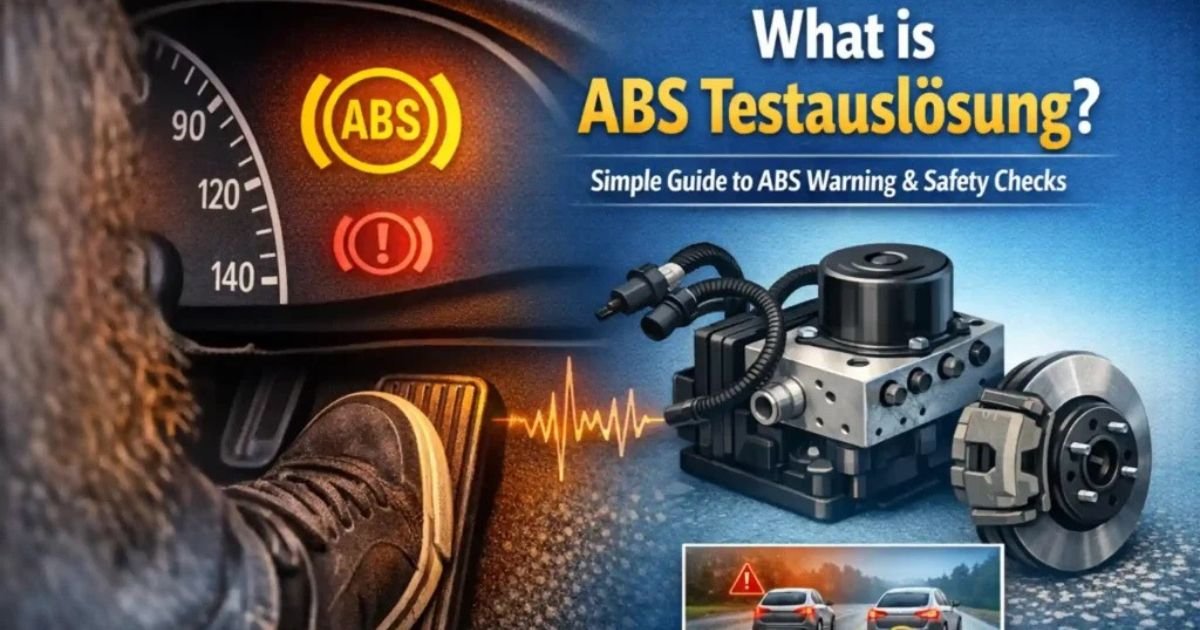
ABS Testauslösung is a German technical phrase that can be translated into English as “ABS test activation” or “triggering an ABS test.” In automotive discussions, it generally refers to activating or checking a vehicle’s Anti-lock Braking System, although the exact meaning depends on the diagnostic software, vehicle manufacturer, and context in which the term appears.
The Anti-lock Braking System is an important vehicle safety feature that helps prevent the wheels from locking during hard braking. It allows drivers to maintain better steering control when they need to slow down quickly, particularly on wet or slippery roads. Because this system depends on electronic sensors, a control unit, hydraulic valves, and other components, it must be able to detect problems and respond correctly.
Understanding ABS Testauslösung can help drivers recognize normal system checks, interpret warning lights, and understand why a mechanic might perform a diagnostic test. It can also help vehicle owners distinguish between a routine ABS self-check and a possible braking system malfunction.
This guide explains what ABS Testauslösung means, how ABS works, when testing is necessary, which components may be checked, what common warning signs mean, and how to respond safely when an ABS problem appears.
What Is ABS Testauslösung?
ABS Testauslösung describes the activation or triggering of an ABS-related test or function. The expression combines the German term ABS, commonly used for an anti-lock braking system in automotive contexts, with Testauslösung, which refers to triggering or initiating a test.
In simple terms, the phrase can describe a situation in which an ABS system is checked to determine whether it responds correctly.
The meaning becomes clearer when the phrase is considered in its actual context. It might appear in a diagnostic menu, a technical discussion, a workshop report, or an explanation of how a vehicle checks its braking electronics.
In automotive diagnostics, ABS testing may involve checking wheel speed sensor signals, inspecting stored fault codes, evaluating the hydraulic control unit, or commanding certain components to operate through compatible diagnostic equipment.
However, ABS Testauslösung does not necessarily identify one universal procedure. Different manufacturers use different diagnostic functions, and a particular test may require specific operating conditions or equipment.
There are three important situations to understand:
- Automatic ABS self-check: The vehicle checks certain system functions during startup or as the vehicle begins moving, depending on its design.
- Diagnostic test activation: A technician uses suitable diagnostic equipment to examine system operation or activate supported components.
- Actual ABS intervention: The system adjusts brake pressure because one or more wheels are approaching a locked condition during braking.
These situations are related, but they are not identical. A normal self-check does not automatically mean the ABS has detected a fault, and a diagnostic test does not necessarily mean the vehicle has experienced an emergency braking event.
What Does ABS Stand For?
ABS stands for Anti-lock Braking System. It is an electronically controlled braking technology designed to reduce the likelihood of wheel lock during hard braking.
When a wheel locks, it stops rotating while the vehicle continues moving. This can cause the tire to slide across the road surface, reducing the driver’s ability to steer effectively.
ABS helps address this problem by monitoring wheel rotation and adjusting brake pressure when necessary. Instead of allowing a wheel to remain locked, the system can reduce, maintain, and increase hydraulic pressure in rapid succession.
The purpose is not simply to make a vehicle stop as quickly as possible in every situation. Its major safety benefit is helping the driver maintain directional control during demanding braking conditions.
ABS is commonly found in passenger cars, motorcycles, vans, buses, and commercial vehicles, although the system’s design and capabilities vary by vehicle type.
What Does Testauslösung Mean in English?
Testauslösung is a German compound word associated with triggering or initiating a test or activation.
Its meaning can be understood through the following breakdown:
| Term | Meaning |
| ABS | Anti-lock Braking System in an automotive context |
| Test | An examination or functional check |
| Auslösung | Triggering, activation, or initiation |
| ABS Testauslösung | Activation or triggering of an ABS-related test |
The most suitable English translation depends on the surrounding technical information. “ABS test activation” is a useful general translation, while “ABS diagnostic test” may be more natural when discussing workshop procedures.
The phrase should not be interpreted as proof that the brakes are defective. It describes a test-related action or event, and further information is needed to determine whether the system is operating normally.
How Does an Anti-lock Braking System Work?
To understand ABS Testauslösung, it helps to understand what happens inside the braking system.
When a driver presses the brake pedal, hydraulic pressure helps the brake pads or shoes slow the wheels. During normal braking, the wheels continue rotating as the vehicle loses speed.
During sudden or excessive braking, however, one or more wheels may begin slowing down much faster than the vehicle itself. If a wheel is about to lock, ABS can intervene to regulate the brake pressure applied to that wheel.
The process happens electronically and hydraulically in a very short time.
Step 1: Wheel Speed Sensors Monitor Rotation
Wheel speed sensors measure how quickly the individual wheels rotate. Depending on the vehicle, sensors may use magnetic or other electronic sensing technology.
The sensors continuously provide information to the ABS control system while the vehicle is operating.
If one sensor produces an incorrect signal, the control unit may struggle to determine whether a wheel is slowing down normally or approaching a locked condition.
Step 2: The Control Unit Evaluates Sensor Information
The ABS electronic control unit receives information from the wheel speed sensors and evaluates how the wheels are behaving.
It looks for changes that may indicate excessive wheel slip or an impending lock. Other vehicle systems and sensor inputs may also contribute to braking and stability decisions.
The control unit then determines whether ABS intervention is necessary.
Step 3: Hydraulic Valves Regulate Brake Pressure
When the system detects a potential wheel lock, hydraulic valves regulate the pressure reaching the relevant brake.
The system may reduce pressure temporarily, hold it steady, and then increase it again as conditions change.
This process helps the tire continue rotating rather than remaining locked.
Step 4: The Driver Maintains Better Steering Control
Because the wheels are less likely to remain locked, the driver generally has a better opportunity to steer while braking.
The system cannot guarantee that the vehicle will avoid a collision, and it cannot create grip where the tires have none. Nevertheless, it provides an important layer of protection during emergency braking.
Step 5: The System Continues Monitoring Conditions
ABS does not operate only at the moment a driver first presses the brake pedal. Its electronic components monitor relevant conditions and respond whenever the system determines intervention is needed.
If the control unit detects a fault, it may store diagnostic information and illuminate the ABS warning light.
This is where ABS Testauslösung and related diagnostic procedures become useful. They help technicians determine whether the system’s components and electronic functions are responding as intended.
When Does ABS Testauslösung Occur?
ABS-related testing can occur in several circumstances. Knowing the difference between them helps drivers avoid confusing a normal system operation with a warning sign.
During Vehicle Startup
Many vehicles perform electronic checks when the ignition is switched on or the engine starts. The ABS warning light may illuminate briefly while the vehicle checks its systems.
The light should generally go out when the required checks are completed, provided the system does not detect a fault.
The precise sequence varies by manufacturer, so the vehicle’s owner’s manual is the best guide to its expected warning light behavior.
When the Vehicle Begins Moving
Some vehicles perform additional ABS checks after the wheels begin rotating or the vehicle reaches a particular low speed.
Drivers may notice a brief mechanical sound, click, or vibration during this process. On vehicles designed to perform such a check, the sensation may be normal if it occurs as described by the manufacturer and is not accompanied by warning signs.
Not every vehicle performs the same checks, and a noise should not automatically be attributed to ABS without considering the circumstances.
During Professional Vehicle Diagnostics
A mechanic may use diagnostic equipment to communicate with the ABS control unit.
Depending on the vehicle and the diagnostic tool, the technician may read fault codes, inspect live wheel speed data, perform supported actuator tests, or run manufacturer-specific functional checks.
A diagnostic activation is different from an automatic self-test because it is deliberately initiated as part of a troubleshooting or maintenance procedure.
After Brake System Repairs
ABS diagnostics may be required after work involving the hydraulic control unit, wheel speed sensors, related wiring, or other braking components.
For example, replacing an ABS hydraulic unit may require a manufacturer-specific bleeding procedure. Certain vehicles use diagnostic equipment to operate internal valves or the pump during the process.
A routine brake fluid change does not automatically require every vehicle to undergo the same electronic procedure. The correct process depends on the vehicle’s design and the repair performed.
When an ABS Warning Light Appears
If the ABS warning light stays illuminated or comes on while driving, a diagnostic inspection may be necessary.
The warning could be associated with a sensor, wiring problem, low voltage, hydraulic component, control unit, or another fault.
A technician can use the stored diagnostic information and further testing to identify the cause rather than replacing parts based on guesswork.
Normal ABS Test vs. a Possible ABS Problem
One of the most important parts of understanding ABS Testauslösung is knowing how to distinguish expected behavior from a possible malfunction.
A brief system check and a persistent warning light do not have the same meaning.
| Situation | Possible interpretation | Recommended action |
| ABS light briefly appears at startup and then goes out | Normal startup check | Follow the vehicle manual |
| Brief mechanical noise during a known startup check | May be normal system operation | Monitor whether it matches the expected pattern |
| ABS light remains on while driving | Possible ABS fault | Arrange a prompt inspection |
| ABS light appears with a red brake warning | Potentially serious braking problem | Stop safely and seek assistance |
| ABS activates during hard braking on a slippery surface | Normal intervention may be occurring | Maintain firm braking and steering control |
| ABS repeatedly intervenes during gentle braking on a dry road | Possible sensor, signal, tire, or mechanical issue | Have the system inspected |
| Brake pedal feels unusually soft or sinks toward the floor | Possible hydraulic braking fault | Stop safely and do not continue driving |
These observations are useful clues, not definitive diagnoses. A vehicle’s warning light behavior and braking characteristics must be evaluated together.
Common Reasons for ABS Warning Lights and Testing
An ABS warning light can have several causes. Because the system relies on electronic information and hydraulic components, a fault in one area can affect the operation of the entire system.
1. Faulty Wheel Speed Sensor
Wheel speed sensors are among the components checked during ABS diagnostics.
A damaged sensor may provide inaccurate, intermittent, or missing wheel speed information. Without reliable data, the control unit may disable some ABS functions or record a fault.
Sensor problems can develop because of physical damage, corrosion, contamination, or internal electrical failure.
A technician can compare the sensor signals and inspect the relevant components to determine whether a sensor requires repair or replacement.
2. Damaged Sensor Wiring
Wheel speed sensors operate near the wheels, where wiring is exposed to moisture, dirt, vibration, heat, and road debris.
A damaged cable or corroded electrical connector can interrupt the signal even if the sensor itself remains functional.
For this reason, replacing a sensor without inspecting its wiring may fail to solve the underlying problem.
A proper diagnosis should consider the complete electrical circuit.
3. Dirty or Damaged Sensor Ring
Some ABS systems use a toothed ring or magnetic encoder associated with the wheel hub or bearing.
If the ring becomes damaged, corroded, contaminated, or improperly positioned, the sensor may not receive a reliable signal.
The design varies between vehicles, so the correct inspection method depends on the installed system.
4. Weak Battery or Electrical Supply Problems
The ABS control unit and hydraulic pump require a suitable electrical supply.
A weak battery, charging system problem, poor ground connection, or voltage drop may cause warning lights or electronic faults.
This possibility is particularly relevant when several dashboard warning lights appear together or the vehicle has recently experienced starting difficulties.
A technician may check the battery, charging system, relevant fuses, wiring, and stored fault codes before concluding that the ABS module itself is defective.
5. ABS Hydraulic Pump Failure
The hydraulic pump helps manage brake pressure during ABS operation.
If the pump motor or its electrical circuit develops a fault, the system may be unable to regulate pressure as intended.
A pump-related fault does not necessarily mean the pump must immediately be replaced. The electrical supply, connections, control signals, and other relevant components should be evaluated first.
6. Hydraulic Valve Problems
The ABS hydraulic unit contains valves that control pressure in the braking circuits.
A valve that fails to operate correctly can interfere with the system’s ability to regulate pressure.
Diagnostic equipment may support controlled activation of certain valves, depending on the vehicle and tool. These tests should be performed according to the manufacturer’s procedure.
7. ABS Control Unit Fault
The ABS control unit processes sensor information and manages system operation.
Electronic damage, internal failure, communication problems, or power supply issues may prevent the system from working correctly.
However, a control unit fault should not be assumed simply because an ABS warning light appears. A thorough diagnosis can help distinguish an internal failure from a problem elsewhere in the system.
8. Low Brake Fluid or a Related Braking Issue
Low brake fluid can indicate worn brake components or a leak. Some vehicles may also display warnings related to braking conditions alongside an ABS warning.
Brake fluid level should be checked according to the owner’s manual, but topping it up without investigating why it is low can conceal a serious problem.
If the fluid level is below the specified minimum, or a leak is suspected, the braking system needs prompt professional attention.
9. Incorrect Tire Sizes or Wheel-Related Problems
ABS relies on wheel speed information. Significant differences in tire size, incorrect tire fitment, or certain wheel-related mechanical problems can affect the information available to the control system.
The impact depends on the vehicle’s design and the specific fault.
Using the correct tire size and maintaining the tires as specified by the manufacturer supports proper operation of ABS and other vehicle safety systems.
How Mechanics Perform an ABS Diagnostic Test
An ABS diagnostic test should be systematic. A qualified technician does not need to activate every component immediately or replace parts simply because a warning light appears.
The aim is to identify the actual fault, confirm the diagnosis, and verify that the braking system works correctly after any repair.
Step 1: Confirm the Vehicle and Reported Symptoms
The technician identifies the vehicle’s make, model, year, and relevant braking system.
They also ask when the warning appeared, whether it remains illuminated, and whether the driver noticed unusual noises, pedal behavior, or other warning lights.
This information helps narrow down the possible causes.
Step 2: Check Warning Lights and Basic Conditions
The technician observes the dashboard warnings and checks relevant basic conditions.
Depending on the symptoms, this may include checking brake fluid level, battery voltage, fuses, visible wiring, and obvious damage around the wheels.
Any serious braking concern takes priority over electronic testing.
Step 3: Read ABS Fault Codes
A compatible diagnostic tool communicates with the ABS control unit and retrieves available diagnostic trouble codes.
These codes may identify a specific wheel speed signal, electrical circuit, communication issue, or internal system fault.
A code indicates an area requiring investigation. It does not always identify the exact failed part.
For example, a wheel speed sensor code may result from a faulty sensor, damaged wiring, a damaged encoder ring, or another signal-related issue.
Step 4: Examine Live Sensor Data
Where supported, the technician compares live wheel speed readings and other relevant information.
If one wheel reports an inconsistent speed while the others provide plausible readings, further inspection may focus on that wheel’s sensor, wiring, or associated components.
Live data helps connect the electronic fault information with the vehicle’s actual behavior.
Step 5: Perform Supported Component Tests
Some diagnostic tools allow trained technicians to activate supported ABS components under specified conditions.
A test may command a pump or valve to operate so the technician can evaluate its response.
The exact available functions depend on the vehicle, diagnostic equipment, and software. A generic code reader may not support these tests.
These procedures should not be attempted using improvised methods or by randomly activating functions in a diagnostic menu.
Step 6: Repair the Confirmed Fault
Once the cause has been established, the technician determines the appropriate repair.
Depending on the findings, this may involve repairing wiring, replacing a sensor, addressing an electrical supply issue, servicing a hydraulic component, or following a more specialized repair procedure.
The repair should address the root cause rather than merely clearing the warning light.
Step 7: Verify the Result
After the repair, the technician checks the system again.
Verification may include rereading fault codes, checking relevant live data, following a required bleeding procedure, or performing a controlled road test when safe and appropriate.
The objective is to confirm that the original fault has been resolved and the system is operating according to the vehicle manufacturer’s requirements.
Read more: Mutstreams: What It Is, How It Works, Sports Coverage, Safety, and Alternatives
Can You Perform ABS Testauslösung at Home?
Vehicle owners can carry out certain basic observations at home, but professional ABS testing is different from checking dashboard lights or inspecting visible components.
A driver can note when the ABS warning light appears, consult the owner’s manual, check for obvious external damage, and arrange a diagnostic inspection.
A suitable diagnostic scanner may also allow some owners to read ABS codes, but the functions available vary considerably.
Not all diagnostic devices can communicate with the ABS module, and fewer still support manufacturer-specific actuator tests or hydraulic bleeding functions.
What You Can Safely Check
Before visiting a workshop, you can gather useful information:
- Note whether the ABS light appears only at startup or remains illuminated.
- Record whether other dashboard warning lights appear at the same time.
- Pay attention to any change in brake pedal feel.
- Check the brake fluid level only as described in the owner’s manual.
- Look for obvious damage around visible wheel wiring without removing safety-critical parts.
- Record any recent battery replacement, tire change, brake repair, or wheel bearing work.
- Avoid clearing diagnostic codes before they have been recorded and investigated.
These observations help the technician understand the problem without exposing you to unnecessary risk.
What You Should Not Attempt
Do not deliberately force the ABS to activate on a public road just to see whether it works.
Do not disconnect wheel speed sensors, short electrical terminals, bypass safety circuits, or activate hydraulic components without the required procedure.
Do not rely on a warning light disappearing after a battery reset as proof that the fault has been repaired.
The ABS is part of the vehicle’s braking safety system. Incorrect testing can introduce additional faults, affect braking performance, or make an existing problem harder to diagnose.
Is ABS Testauslösung Dangerous?
ABS Testauslösung is not inherently dangerous simply because a test is being performed. The risk depends on what is being tested, how it is performed, and whether the vehicle has an existing fault.
A routine self-check designed by the manufacturer is generally part of normal vehicle operation. A professional diagnostic test can also be appropriate when carried out using the specified equipment and precautions.
The important distinction is between a controlled test and an improvised experiment.
A workshop test may involve activating hydraulic components, raising a vehicle, or following a specific sequence. Such work requires suitable equipment, knowledge of the vehicle, and an understanding of the relevant safety precautions.
If the brakes already show signs of malfunction, testing should not be treated as a substitute for repair.
Signs That Require Immediate Attention
Stop in a safe location and seek professional assistance if you notice any of the following:
- A red brake warning light accompanied by an ABS warning.
- A brake pedal that suddenly becomes soft, sinks, or behaves abnormally.
- A significant reduction in braking performance.
- Visible brake fluid leakage.
- Grinding or other severe mechanical noises associated with braking.
- A sudden change in how the vehicle responds when you apply the brakes.
If the vehicle does not feel safe to drive, arrange recovery rather than attempting to reach a workshop under its own power.
Can You Drive With the ABS Warning Light On?

Whether a vehicle can be moved with an ABS warning light illuminated depends on the other symptoms and the vehicle manufacturer’s instructions.
In many vehicles, a fault affecting ABS alone may leave conventional braking available while reducing or disabling anti-lock assistance. However, drivers should not assume that this is always the case.
Without functioning ABS, wheels may lock more easily during emergency braking, particularly when road grip is limited. Some vehicles may also lose related functions, such as certain electronic stability or traction control features.
If the warning light stays on but the brakes feel normal and there are no additional warnings, consult the owner’s manual and arrange prompt inspection. If the manual permits cautious travel and there are no other warning signs, a short trip to a nearby workshop may be possible.
Drive more cautiously, leave a larger following distance, and avoid unnecessary high speeds or sudden maneuvers.
If a red brake warning appears, the pedal feels abnormal, or braking performance has changed, stop safely and obtain professional assistance.
ABS Testauslösung in Cars, Motorcycles, and Commercial Vehicles
The basic principle of ABS is similar across many vehicle types, but the design, diagnostic process, and safety requirements can differ.
ABS Testauslösung in Cars
Passenger cars commonly use wheel speed sensors, an electronic control unit, and a hydraulic control assembly.
A diagnostic check may investigate sensor signals, electrical connections, stored fault codes, pump operation, and supported valve functions.
Some cars combine ABS with electronic stability control and traction control. A single sensor fault may therefore produce several warning lights.
The exact diagnostic procedure depends on the vehicle model and installed system.
ABS Testauslösung in Motorcycles
Motorcycle ABS helps reduce the risk of wheel lock during braking while supporting rider control.
Some motorcycles use separate front and rear wheel speed sensors, while more advanced systems may include additional functions or sensor inputs.
An ABS warning light that remains on beyond the expected self-check should be investigated according to the motorcycle’s manual.
Motorcycle owners should not attempt improvised ABS activation tests on public roads. Braking behavior, balance, and available traction can differ substantially from those of a car.
ABS Testauslösung in Commercial Vehicles
Commercial vehicles may use more complex braking and electronic control systems, depending on the vehicle type.
Their diagnostic procedures may require specialized equipment and trained personnel. In some cases, faults can affect several connected vehicle systems.
Because commercial vehicles may carry heavy loads, any braking problem requires particular care. Operators should follow the manufacturer’s maintenance requirements and applicable vehicle safety procedures.
Does ABS Always Reduce Stopping Distance?
ABS is primarily designed to help prevent wheel lock and preserve steering control during braking. It does not guarantee the shortest possible stopping distance on every surface.
On many paved roads, ABS can support effective emergency braking while helping the driver retain control. However, stopping distance depends on several factors, including tire condition, road surface, vehicle speed, weather, load, and the specific ABS design.
On some loose surfaces, such as deep gravel or certain snow conditions, a locked wheel may build up material in front of the tire and stop the vehicle over a shorter distance. ABS may not reproduce that effect, although it can still provide important steering benefits.
Drivers should never assume ABS makes unsafe speeds acceptable or removes the need for a safe following distance.
When ABS activates during an emergency stop, apply firm, continuous pressure to the brake pedal and steer as needed to avoid danger. Do not repeatedly pump the brake pedal in a vehicle with a functioning ABS system unless the vehicle’s instructions specifically require a different approach.
How to Maintain an ABS System Properly
Regular maintenance can help prevent avoidable braking problems and identify developing faults before they become more serious.
ABS maintenance does not mean triggering a test every few days. It means maintaining the components on which the system depends and responding appropriately when symptoms appear.
Follow the Recommended Brake Service Schedule
Follow the vehicle manufacturer’s instructions for inspecting the braking system, replacing brake fluid, and servicing worn components.
Brake fluid maintenance intervals vary by vehicle. Use the specified fluid type and service procedure.
Inspect Tires and Wheels
Use tires of the correct size and specification. Maintain appropriate tire pressure and replace damaged or excessively worn tires.
Because ABS evaluates wheel behavior, correct tire fitment and sound wheel components help the system operate as intended.
Address Warning Lights Promptly
Do not ignore a persistent ABS warning just because the vehicle appears to stop normally.
An early diagnostic inspection may identify a relatively straightforward issue, such as damaged wiring or a sensor problem, before it causes further inconvenience.
Avoid Unnecessary Electrical Modifications
Poor-quality wiring modifications or incorrect electrical repairs can affect vehicle control systems.
Any repair involving ABS wiring, connectors, sensors, or the control unit should follow the appropriate technical procedure.
Check the System After Relevant Repairs
After work involving ABS components, wheel hubs, sensors, hydraulic assemblies, or brake lines, ask whether additional diagnostic checks or a specific bleeding procedure are required.
The correct post-repair checks depend on what was replaced and the vehicle’s design.
Why ABS Testauslösung Matters for Vehicle Safety
ABS Testauslösung matters because a braking system must be able to respond correctly when a driver needs to stop quickly.
A vehicle may appear to operate normally during everyday driving even when a safety system has stored a fault. For example, a sensor may work intermittently, or a component may fail only under particular conditions.
Diagnostic testing helps identify these problems by examining the information available to the control unit and checking the operation of supported components.
Understanding the term also helps drivers interpret technical language more accurately. A reference to a test activation is not automatically a warning that the brakes have failed. Equally, a test-related message should not be dismissed without understanding what the vehicle is reporting.
The best approach is to consider the complete context: the exact message, the warning lights, the vehicle’s behavior, and any recent maintenance or repairs.
Frequently Asked Questions About ABS Testauslösung
What does ABS Testauslösung mean in English?
ABS Testauslösung generally means ABS test activation or triggering an ABS test. In an automotive context, it may describe a system check, a diagnostic activation, or another test-related function. The exact interpretation depends on where the term appears.
Is ABS Testauslösung a warning message?
Not necessarily. The phrase itself describes test-related activation and does not automatically indicate a fault. If it appears alongside an ABS warning light or an unusual braking symptom, the complete message should be checked.
What triggers an ABS self-test?
Depending on the vehicle, an ABS self-check may begin when the ignition is switched on, the engine starts, or the vehicle begins moving. Manufacturers use different procedures, so the owner’s manual provides the most accurate information for a particular model.
Why does my ABS light turn on and then disappear?
A brief ABS light during startup is often part of the normal system check. If it goes out as expected and no other symptoms appear, this is generally not a reason for concern. A light that remains on or returns while driving requires investigation.
Why does my brake pedal vibrate when ABS activates?
During genuine ABS intervention, the system rapidly regulates hydraulic brake pressure. The driver may feel pulsing through the brake pedal and hear a buzzing or clicking sound. This can be normal during hard braking, but repeated unusual vibrations during gentle braking should be inspected.
Can a faulty wheel speed sensor cause ABS problems?
Yes. A faulty sensor can send inaccurate or missing wheel speed information to the ABS control unit. Damaged wiring, a poor connection, or a problem with the associated sensor ring can produce similar symptoms, so testing is needed to identify the cause.
Can I test ABS with a basic OBD-II scanner?
Some basic scanners only read engine-related diagnostic codes and cannot access the ABS control unit. Others support ABS fault codes but may not support component activation or hydraulic bleeding. The required capabilities depend on the vehicle and the diagnostic task.
Does ABS Testauslösung require a professional mechanic?
Simple observations, such as checking warning light behavior, can be performed by a vehicle owner. However, diagnostic actuator tests and procedures involving hydraulic components should be performed by someone with the appropriate equipment and training.
Can I drive if my ABS light stays on?
The answer depends on the vehicle and whether other braking warnings or symptoms are present. A fault limited to ABS may leave conventional braking available, but anti-lock assistance could be reduced or unavailable. Consult the owner’s manual and arrange an inspection. If braking performance changes or a serious brake warning appears, stop safely and seek assistance.
Does an ABS fault mean my normal brakes have stopped working?
Not always. Some ABS faults disable anti-lock assistance while leaving conventional braking available. However, the actual condition cannot be determined from the ABS light alone. Abnormal pedal behavior, fluid leakage, a red brake warning, or reduced braking performance should be treated as serious.
Can low battery voltage cause an ABS warning?
Yes, electrical supply problems can cause ABS-related warnings on some vehicles. A weak battery, charging system issue, poor ground connection, or voltage drop may affect electronic components. Proper diagnosis is necessary before replacing parts.
How do mechanics perform an ABS actuator test?
When the vehicle supports it, a mechanic uses compatible diagnostic equipment to command specific components to operate under defined conditions. The technician evaluates the response and combines the findings with fault codes, live data, and physical inspections. The exact procedure varies by vehicle.
Is ABS Testauslösung the same in every car?
No. The general purpose of ABS testing is similar, but diagnostic menus, operating conditions, component designs, and available tests differ between manufacturers and models.
Does ABS work on wet roads?
Yes. ABS can help prevent wheel lock on wet roads when the system is functioning correctly. However, wet conditions reduce tire grip and can increase stopping distances. Drivers should reduce speed when necessary and leave adequate space between vehicles.
How often should ABS be tested?
There is no single interval that applies to every vehicle. Follow the manufacturer’s maintenance schedule and arrange diagnostic checks when an ABS warning appears, a relevant component is repaired, or a braking problem is suspected.
Can ABS faults disappear on their own?
Some warnings may disappear when an intermittent condition is no longer present, but that does not prove the underlying problem has been resolved. Stored diagnostic information and the vehicle’s behavior should be checked when a warning returns or a fault is suspected.
What should I do if ABS activates during normal driving?
If ABS activates during hard braking or on a slippery surface, it may be responding normally. If it repeatedly activates during gentle braking on a dry road, have the system inspected. Avoid deliberately provoking ABS activation to investigate the issue.
Final Thoughts
ABS Testauslösung is a German technical expression that generally refers to activating or triggering an ABS-related test in an automotive context. Understanding the phrase helps drivers distinguish a routine system check from a diagnostic procedure or an actual ABS intervention during braking.
The Anti-lock Braking System helps reduce wheel lock and supports steering control during hard braking. Its operation depends on components such as wheel speed sensors, electronic controls, hydraulic valves, wiring, and a pump. A fault in one of these areas may trigger a warning light or affect system performance.
If your vehicle performs a brief, expected startup check, there may be nothing wrong. However, a persistent ABS warning, unusual braking behavior, or a red brake warning should never be ignored. Professional diagnostics can help identify the cause and confirm whether a repair is needed.
The most important principle is simple: understand the message, observe the symptoms, follow the vehicle manufacturer’s guidance, and leave safety-critical testing to qualified professionals when specialized equipment or procedures are required. Proper maintenance and timely diagnosis help keep your braking system reliable when you need it most.