
Pappedeckel: Meaning, Origins, Uses, Materials, and Complete Guide
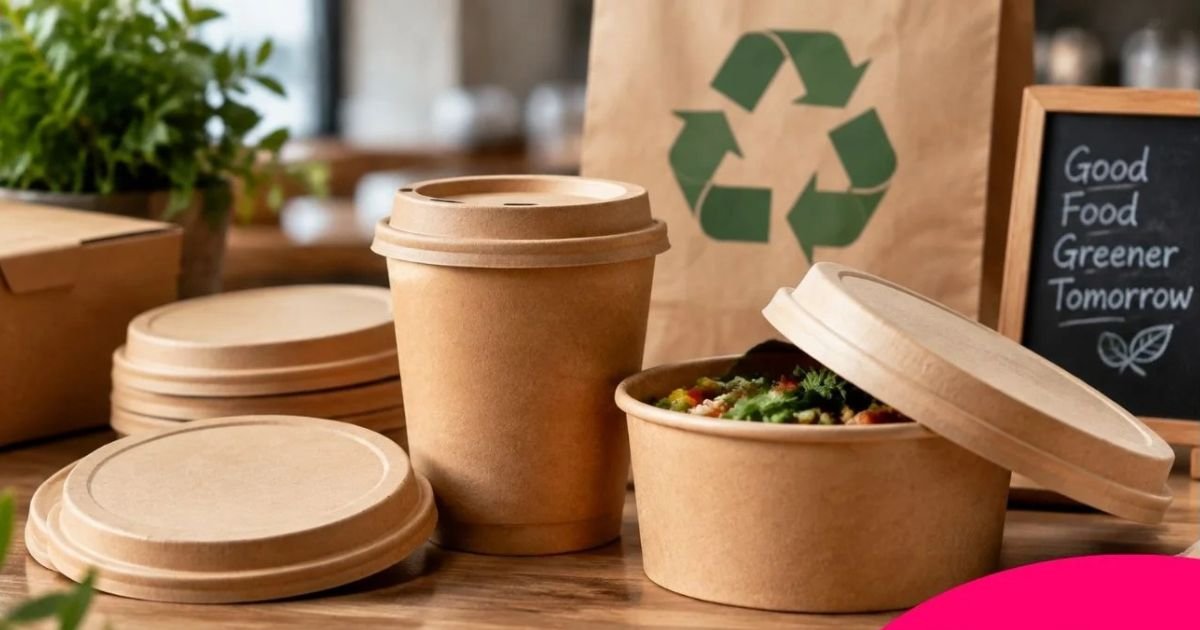
Pappedeckel is a German-related word that often attracts attention because its meaning is not immediately clear to English speakers. It is associated with cardboard, paperboard, and pieces of stiff paper-based material. Depending on the context, it may refer to a piece of cardboard, a cardboard cover, a protective board, or a lid made from paperboard.
Although the word may look unusual, the material behind it is familiar. Cardboard is used in packaging, book covers, storage boxes, craft projects, product protection, and many everyday items. Understanding Pappedeckel helps explain how a simple German term connects language, traditional materials, practical design, and modern packaging.
However, there is an important distinction between a word’s literal translation and its actual use. Pappedeckel is closely related to the German forms Pappdeckel and Pappendeckel. The most suitable English translation depends on the sentence, the object being described, and the situation in which the word appears.
This guide explains what Pappedeckel means, where it comes from, how it is used, which materials are associated with it, and what to consider when choosing cardboard products for everyday or commercial purposes.
What Is Pappedeckel?
Pappedeckel is a German-related term associated with cardboard and objects made from stiff paper-based material. In simple English, the safest general interpretation is often a piece of cardboard or a cardboard cover.
The term is particularly interesting because it can be interpreted differently depending on the context. Someone discussing packaging might use a related expression for a cardboard lid, while someone working on a craft project might be referring to a flat piece of stiff cardboard.
In German, Pappe refers to cardboard or a relatively rigid paper-based material. Deckel commonly means a lid or cover. Combining these ideas makes the translation cardboard lid understandable, but it does not mean that every use of Pappedeckel refers to a container closure.
Related standard German forms, particularly Pappdeckel and Pappendeckel, are used for a piece of cardboard. Pappedeckel is associated with regional or colloquial usage, so it is important to consider the context rather than assume that it identifies one particular manufactured product.
Pappedeckel in Simple English
The easiest way to understand Pappedeckel is to think of a flat, relatively stiff piece of cardboard or an object made from similar material.
For example, imagine a piece of board placed inside a package to protect its contents. It could also be a stiff piece used as backing for a folder or a cover for a small storage box. These examples illustrate the broader cardboard-related meaning.
Possible English translations include:
- Cardboard
- A piece of cardboard
- Paperboard
- A cardboard cover
- A cardboard lid
- A stiff cardboard piece
These translations are not interchangeable in every situation. If the object is simply a piece of material, cardboard may be sufficient. If it closes a container, cardboard lid may be more accurate. The surrounding sentence provides the information needed to select the best translation.
What Is the Origin of the Word Pappedeckel?
Pappedeckel is connected with German vocabulary relating to paper-based materials and covers. Its meaning becomes easier to understand by examining the components of the related word Pappdeckel.
The first component, Pappe, refers to cardboard or a relatively stiff material made from paper fibres. The second component, Deckel, usually refers to a lid, cover, or closure.
German frequently combines words to describe objects, materials, and functions. Such compound words can provide useful clues about meaning, although their actual definitions do not always match a direct word-for-word translation.
In this case, the combination suggests something made from cardboard that serves as a cover or forms a distinct piece of board. In ordinary language, the meaning may be broader than a literal translation suggests.
Why the Word Can Be Confusing
The main source of confusion is the difference between literal meaning and contextual meaning.
An English speaker might see Deckel and immediately think of the lid of a jar, bottle, or box. However, the related German noun Pappdeckel is also used for a piece of cardboard more generally.
This distinction matters when translating instructions, product descriptions, conversations, or written material. A flat board used in a craft project is not necessarily a lid, even if a literal interpretation suggests one.
Regional speech can introduce additional variations. Therefore, Pappedeckel should be interpreted with attention to the object, sentence, and regional setting rather than through word components alone.
Pappedeckel, Pappdeckel, and Pappendeckel: Understanding the Differences
People searching for Pappedeckel may encounter several similar spellings. These forms are closely related, but they do not all have the same status in standard written German.
Pappdeckel and Pappendeckel are established German forms associated with a piece of cardboard. Pappedeckel appears in regional or colloquial usage. The precise choice can depend on the linguistic setting.
Understanding these variations is helpful for language learners, translators, writers, and anyone trying to identify the meaning of an unfamiliar German word.
Pappedeckel
Pappedeckel is the spelling people may encounter in regional writing or informal contexts. It is associated with cardboard and cardboard-related objects.
Its meaning should be interpreted in context. It does not automatically identify a special packaging technology, a specific brand, or one standardized material.
Pappdeckel
Pappdeckel is a standard German compound associated with a piece of cardboard. It is a useful form to recognize when reading German product descriptions or learning vocabulary.
Depending on the situation, it may be translated as cardboard, a piece of cardboard, or a cardboard cover.
Pappendeckel
Pappendeckel is another established form with a similar basic meaning. Like Pappdeckel, it is associated with cardboard or a piece made from this material.
For formal writing, the best choice depends on the intended meaning and the language reference being followed.
Comparison of the Three Terms
| Term | General interpretation | Important consideration |
| Pappedeckel | Regional or colloquial cardboard-related expression | Meaning depends on context |
| Pappdeckel | Piece of cardboard | Established standard form |
| Pappendeckel | Cardboard or a piece of cardboard | Related established form |
The practical lesson is simple: the three spellings are closely related, but choosing the correct translation requires more than matching individual letters.
What Does Pappedeckel Mean in English?
There is no single English translation that works perfectly in every context. The right expression depends on whether the speaker means the material itself, a flat piece of board, or an object performing a particular function.
For general reading, piece of cardboard is a useful starting point. It communicates the basic meaning without assuming that the material has a special shape or purpose.
Cardboard
Cardboard is the most familiar general term for stiff paper-based material. It is suitable when the exact thickness, composition, or intended application is not important.
For example, someone asking for cardboard for a school project is probably referring to a material rather than a finished product.
Paperboard
Paperboard is commonly used in packaging and manufacturing contexts. It can be a more appropriate term when discussing engineered paper-based sheets, packaging components, or material specifications.
However, Pappedeckel alone does not identify a particular paperboard grade.
Cardboard Cover
Cardboard cover is appropriate when a piece of board protects or covers something. Examples include the outer structure of a folder, a protective cover for a storage container, or a backing piece.
Cardboard Lid
Cardboard lid is appropriate when the object is designed to close the opening of a container. A lid may need to fit a particular shape, remain in place during handling, and resist the conditions associated with the contents.
The important point is that the function must match the translation. A flat piece of cardboard should not automatically be described as a lid.
Common Uses of Pappedeckel
Cardboard is versatile because it can be cut, folded, layered, printed, shaped, and manufactured in different thicknesses. These properties explain why cardboard-related terms appear in many practical settings.
The following applications illustrate where a piece of cardboard or a cardboard cover may be useful.
1. Packaging and Product Protection
Cardboard is widely used to protect goods during storage, handling, and transportation. A flat piece of board can separate products, reinforce a package, cover exposed contents, or help maintain the shape of a container.
In a packaging context, a Pappedeckel-related object might function as a cover or a protective insert. Its suitability depends on its dimensions, stiffness, and intended purpose.
For example, a manufacturer may place a board insert inside a box to keep items from moving. Another business may use a rigid cover to protect a product’s surface.
These examples demonstrate the practical value of cardboard without implying that Pappedeckel names one specific packaging product.
2. Bookbinding and Notebook Covers
Cardboard and other rigid paper-based materials are useful in bookbinding because they provide structure to an otherwise flexible product.
A book cover may include a stiff board beneath a printed or decorative outer layer. This structure helps protect pages and gives the finished book a more stable shape.
Similar materials may be used for notebooks, folders, albums, presentation covers, and document holders.
In these settings, cardboard board or cover board may be a more natural English description than cardboard lid.
3. Storage Boxes and Organizers
Many storage products use cardboard to create lightweight structures. Small organizers, drawer dividers, document boxes, and decorative containers can all incorporate stiff paper-based components.
A cardboard cover may help reduce dust exposure, keep stored items together, or make a box easier to stack.
The performance of the finished product depends on more than the material’s name. Board thickness, construction quality, moisture exposure, and the weight of stored objects all influence its usefulness.
4. Arts and Crafts
Cardboard is a popular material for creative work because it is relatively accessible and easy to shape with suitable tools.
It can be used for:
- School models and educational projects
- Decorative signs and labels
- Picture frames and backing boards
- Handmade organizers
- Templates and patterns
- Scrapbooking and paper crafts
- Small architectural models
- Decorative gift packaging
For many of these activities, a flat piece of cardboard is all that is required. A special lid or finished packaging component is unnecessary.
The most suitable thickness depends on the project. Thin board works well for lightweight decorations, while thicker board may be preferable for a model that needs to maintain its shape.
5. Office and Stationery Products
Cardboard is also useful in everyday office products. Folders, dividers, file covers, document backing sheets, and presentation materials may contain stiff paper-based components.
These components help keep papers organized and provide a more durable structure than ordinary writing paper.
For offices that store documents frequently, choosing an appropriate thickness can make a difference in how well folders and covers withstand repeated handling.
6. Food and Beverage Accessories
Some cardboard products are designed for use around food and drinks. Examples include beverage coasters, certain food packaging components, and paperboard covers.
However, not every cardboard item is suitable for direct food contact. A product intended to touch food must be appropriate for that purpose, including any coating, adhesive, ink, and other components used in its construction.
A cardboard object should not be considered food-safe merely because it is made from paper fibres.
7. Decorative and Gift Packaging
Gift boxes and presentation packaging often combine printed paper, decorative surfaces, and rigid board. This combination provides structure while allowing a product to look attractive.
Cardboard covers can help protect the contents and create a neat appearance. They may also support printed designs, labels, or brand information.
For businesses, packaging design should balance appearance, protection, manufacturing cost, and ease of use.
What Materials Are Associated With Pappedeckel?
Pappedeckel is a language term rather than a precise technical material specification. It does not establish a particular thickness, fibre source, coating, weight, or manufacturing process.
Cardboard-related products may use different paper-based materials depending on their intended applications.
Recycled Paper Fibres
Some cardboard products are manufactured partly or primarily from recovered paper fibres. Recycling can help keep usable fibre in circulation and reduce demand for newly sourced material.
However, recycled content does not automatically make every product recyclable again. Coatings, adhesives, contamination, and local recycling facilities can affect disposal options.
Virgin Paper Fibres
Other paperboard products use virgin fibres, which have not previously been processed into paper products. These fibres may be selected for particular strength, appearance, or manufacturing requirements.
Whether virgin or recycled fibre is more appropriate depends on the product’s performance requirements and its environmental context.
Coated Paperboard
Some paperboards are coated to improve surface appearance, print quality, moisture resistance, or performance in a specific application.
The properties depend on the coating and the way the finished product is manufactured.
A coating can also affect recycling or composting options, so the material should be evaluated as a complete product rather than by looking only at its paper content.
Corrugated Board
Corrugated board typically contains a fluted layer between flat liner layers. This construction provides strength and cushioning for shipping boxes and protective packaging.
It differs from many solid paperboard products. Consequently, it should not be assumed that every object described by a cardboard-related term has a corrugated structure.
How Is Cardboard Made?
Although Pappedeckel does not describe one specific manufacturing process, understanding cardboard production helps explain the characteristics of the material family associated with the word.
The process varies by product, but many paper-based boards follow several general stages.
Step 1: Preparing the Fibre Material
Paper fibres are prepared from suitable pulp. Depending on the product, the source may include recycled paper, virgin pulp, or a combination of fibres.
The selected material influences strength, surface quality, colour, and other characteristics.
Step 2: Forming the Sheet
The prepared fibres are distributed into a sheet and processed to remove excess water. As the sheet dries, the fibres form a connected structure.
Different manufacturing techniques can produce materials with different thicknesses and performance characteristics.
Step 3: Pressing and Finishing
The sheet may be pressed or otherwise processed to improve its uniformity, surface, or density.
Some products receive additional layers, coatings, or finishing treatments depending on their intended use.
Step 4: Cutting and Shaping
The finished board is cut into sheets, blanks, or shapes. When the final product requires a lid, cover, insert, or fitted component, the pieces may be cut and folded according to a design.
Precision matters because a poorly fitted component may fail to protect the product or close a container properly.
Step 5: Quality Checking
Manufacturers may inspect dimensions, surface appearance, stiffness, and other characteristics relevant to the product.
For packaging components, quality checks may also consider fit, resistance to handling, and performance under expected storage conditions.
Not every cardboard product requires the same tests. The appropriate checks depend on its use and the standards applicable to the finished item.
Advantages of Cardboard-Based Products
Cardboard remains useful because it combines several practical properties. The benefits vary by material grade and construction, but common advantages include the following.
Lightweight Construction
Many cardboard products weigh less than comparable components made from materials such as wood or metal. This can make them easier to transport, handle, and store.
Lightweight construction can be particularly useful for packaging and stationery.
Flexible Design Options
Cardboard can be cut, folded, printed, layered, and shaped into a wide variety of products.
Manufacturers can use these properties to create simple covers, decorative packaging, inserts, dividers, and storage products.
Broad Availability
Paper-based board is used in many industries, making it a familiar material for manufacturers, retailers, schools, and craft enthusiasts.
Availability still depends on the required grade, dimensions, quantity, and local suppliers.
Potential for Recycling
Many uncoated paperboard products can be recycled where suitable collection and processing facilities exist.
Actual recyclability depends on the finished item’s composition, contamination, coatings, adhesives, and local rules.
Cost-Conscious Applications
For suitable applications, cardboard can provide a practical balance between cost, weight, and functionality.
However, a low initial price does not always mean the lowest overall cost. Durability, product damage, replacement frequency, and disposal requirements should also be considered.
Read more: Fentomagazine.com USA: Complete Guide to Fento Magazine, Its Features, Content, and Online Experience
Limitations and Important Considerations
Cardboard is useful, but it is not suitable for every environment or purpose. Understanding its limitations helps prevent problems when choosing a material.
Moisture Sensitivity
Untreated cardboard can absorb moisture and lose strength. Prolonged exposure to water or humid conditions may cause swelling, warping, or deterioration.
Moisture-resistant treatments can improve performance in some situations, but the results depend on the product design and coating.
Limited Structural Strength
Cardboard can support many everyday objects, but its load capacity is limited. A thin piece of board may bend under pressure, while a stronger engineered structure may be required for heavier products.
The required strength should be assessed according to the intended load and conditions.
Wear and Repeated Handling
Repeated bending, friction, and handling can damage cardboard. Edges may become crushed, surfaces may wear, and folded sections may weaken.
For products expected to last a long time, material thickness and construction quality are important.
Food Safety Requirements
Cardboard products intended for food contact must meet the relevant requirements for their intended use. The safety of the finished item can depend on coatings, inks, adhesives, manufacturing controls, and the food involved.
Ordinary craft cardboard should not be assumed suitable for food packaging.
Environmental Disposal Challenges
Although many cardboard products are recyclable, not all can be processed through the same recycling systems. Laminated, heavily coated, or contaminated items may require different handling.
The correct disposal method depends on local facilities and the product’s composition.
Is Pappedeckel Environmentally Friendly?
Cardboard is often considered a useful alternative to certain plastic or rigid packaging materials, but its environmental impact cannot be determined from the word Pappedeckel alone.
The source of the fibres, manufacturing energy, water use, transportation, product lifespan, and disposal method all contribute to the overall impact.
Recyclability
A clean, uncoated cardboard product may be accepted by many paper recycling programs. However, local requirements vary.
Food residue, plastic laminations, wax-like treatments, and some mixed-material constructions can make recycling more difficult.
Before choosing a product for a sustainability-focused project, check whether the complete item is accepted by the intended recycling system.
Recycled Content
Using recovered paper fibres can reduce reliance on virgin materials. Nevertheless, recycled content is only one part of the environmental picture.
A durable product that prevents damage may provide benefits that should also be considered when evaluating packaging options.
Reusability
Some cardboard products can be reused for storage, organization, or craft activities. Reuse may extend the useful life of a suitable product before disposal.
However, reuse is practical only when the material remains clean, structurally sound, and appropriate for its next purpose.
Compostability
Cardboard is not automatically suitable for every composting system. Coatings, adhesives, inks, and other additions may affect whether a product can be composted.
A compostability claim should be supported by reliable product information and should specify the conditions under which the product can break down.
Choosing a More Sustainable Option
A sensible approach is to select a product that meets the actual functional requirements without unnecessary material. Consider its strength, lifespan, recycled content, packaging design, and realistic end-of-life options.
Sustainability is best assessed through the full life cycle of the product rather than by assuming that every paper-based item is environmentally harmless.
How to Choose the Right Cardboard Cover or Board
If you are purchasing a cardboard component, the word Pappedeckel is not enough to determine whether the product will meet your needs. You should evaluate its design and technical properties.
Consider the Intended Purpose
First, identify what the item needs to do. A cover that protects documents has different requirements from a lid designed for a food container.
A craft project may need a board that is easy to cut, while a shipping package may require greater rigidity and resistance to handling.
Check the Dimensions
Length, width, thickness, and shape determine whether a piece fits its intended application.
For lids and covers, a poor fit can leave gaps or cause the component to move during use.
Evaluate Strength and Stiffness
The appropriate stiffness depends on the weight and pressure the material must handle.
A lightweight insert may be sufficient for protecting a flat surface, while a box cover may need a stronger structure to retain its shape.
Check Surface Treatments
Coatings and laminations may affect print quality, moisture resistance, durability, food-contact suitability, and recycling.
Ask for material information if the finished product will be used in a demanding environment.
Review Product Specifications
For commercial purchases, confirm the material grade, dimensions, permitted applications, and any relevant safety requirements.
This is particularly important for food packaging, industrial components, and products that must meet specific performance standards.
Pappedeckel in Everyday Life
The concept behind Pappedeckel is easier to understand when connected with familiar objects. Cardboard appears in daily activities so frequently that many people use it without considering the material or its terminology.
At home, it may appear in storage boxes, notebook covers, organizers, and product packaging. At school, it can become a model, poster backing, or craft template. In an office, it may form a file cover or divider. In a shop, it can help protect products or provide structure to a presentation box.
These examples illustrate the versatility of cardboard-related materials. They do not mean that every object has the same construction or should be given the same technical name.
The purpose, shape, and material properties determine how a particular piece should be described.
How to Use Pappedeckel Correctly in a Sentence
If you are learning German or translating a sentence, begin by identifying the object being discussed.
If the context is about a material, cardboard may be the most natural English translation. If it describes a flat object, piece of cardboard may be more precise. If the object closes a box, cardboard lid may communicate the intended function.
For example, consider the difference between these situations:
- A student needs a piece of cardboard to create a model.
- A manufacturer needs a fitted cardboard cover for a package.
- An office worker uses a stiff board to reinforce a folder.
- A packaging designer selects paperboard for a protective insert.
Each situation involves cardboard-related material, but the most natural description differs.
When writing formal German, consider whether Pappdeckel or Pappendeckel is the appropriate form for the intended meaning. When reading regional or informal text, allow for spelling variations and examine the surrounding sentence.
This method is more reliable than applying one literal translation everywhere.
Common Misunderstandings About Pappedeckel
Several misconceptions can make the term harder to understand than it needs to be.
Pappedeckel Always Means Cardboard Lid
Not necessarily. A lid is one possible interpretation when the object performs that function. The related standard German word Pappdeckel is also associated with a piece of cardboard more generally.
Pappedeckel Is a Specific Brand or Technology
The word itself does not identify one manufacturer, brand, or patented packaging system. It is a cardboard-related linguistic expression.
A particular commercial product may have its own name and specifications, but those details cannot be inferred from the word alone.
All Cardboard Products Have the Same Properties
Cardboard materials vary in thickness, density, construction, coating, and strength. A thin sheet used for a craft project will not necessarily perform like a rigid packaging component.
Cardboard Is Always Waterproof
Ordinary cardboard is generally sensitive to moisture. Some treatments can improve resistance, but their performance depends on the product and conditions.
Every Paper-Based Product Is Recyclable or Compostable
Recycling and composting depend on the complete material, its condition, and the facilities available. Paper content alone does not guarantee that a finished product can be processed through every waste system.
Frequently Asked Questions About Pappedeckel
What does Pappedeckel mean?
Pappedeckel is a German-related term associated with cardboard, paperboard, or a piece made from stiff paper-based material. Depending on the context, it may be interpreted as cardboard, a cardboard cover, or a lid.
Is Pappedeckel a German word?
It is associated with German vocabulary and regional usage. The closely related forms Pappdeckel and Pappendeckel are established German nouns associated with a piece of cardboard.
What is the English translation of Pappedeckel?
The best translation depends on context. Common possibilities include cardboard, piece of cardboard, paperboard, cardboard cover, and cardboard lid.
What is the difference between Pappedeckel and Pappdeckel?
Pappedeckel is associated with regional or colloquial usage, while Pappdeckel is an established standard German form. Their meanings are closely related, but the appropriate spelling depends on the linguistic context.
Is Pappendeckel the same as Pappdeckel?
Both forms are associated with cardboard or a piece of cardboard. They are related German nouns, although spelling and usage should be considered when writing formal German.
Does Pappedeckel refer to a cardboard box?
Not necessarily. It may refer to a piece of cardboard or a cardboard-related object. A complete box is a different object, and the surrounding context determines the intended meaning.
Is Pappedeckel used in packaging?
Cardboard-related materials are widely used in packaging, including covers, inserts, dividers, and protective components. However, Pappedeckel is not the name of one standardized packaging product.
Can Pappedeckel be used for crafts?
Cardboard is useful for many craft projects, including models, templates, decorations, and backing boards. The suitable thickness depends on the design and the amount of strength required.
Is Pappedeckel environmentally friendly?
The term itself does not establish environmental performance. Some cardboard products are recyclable or contain recycled fibres, but coatings, adhesives, contamination, and disposal infrastructure influence their environmental impact.
Is Pappedeckel suitable for food packaging?
A cardboard product may be suitable for food packaging if it has been designed and manufactured for that purpose and meets the applicable requirements. Ordinary cardboard should not automatically be considered safe for direct food contact.
Is Pappedeckel waterproof?
Not inherently. Ordinary cardboard can absorb moisture and lose strength. Some coated or specially treated products provide improved moisture resistance, depending on their design.
Why is Pappedeckel difficult to translate?
The difficulty comes from related spellings, regional usage, and the difference between a literal compound and its contextual meaning. The same cardboard-related idea may be expressed differently in English depending on the object’s function.
Is Pappedeckel a modern invention?
The word is connected with German vocabulary for cardboard and covers rather than one specific modern invention. Cardboard itself has a long history of use in packaging, bookbinding, and other applications.
Conclusion
Pappedeckel is a German-related term associated with cardboard, paperboard, and objects made from stiff paper-based materials. Although a literal translation may suggest a cardboard lid, the meaning is broader and depends on context. The related forms Pappdeckel and Pappendeckel are established German nouns used for a piece of cardboard, while Pappedeckel is associated with regional or colloquial usage.
The concept connects naturally with everyday objects such as packaging covers, bookbinding materials, storage products, office supplies, and craft components. Understanding the material also helps explain its advantages, including lightweight construction and design flexibility, alongside limitations such as moisture sensitivity and varying recycling requirements.
For accurate translation, the most important step is to identify the object and its purpose. For purchasing or manufacturing decisions, the material’s actual specifications matter more than the name alone.
In short, Pappedeckel is best understood as part of a broader German vocabulary associated with cardboard. Its precise English meaning becomes clear when language, context, and practical use are considered together.






One Comment