
Tsunaihaiya: Meaning, Origin, Jewelry, Craftsmanship, and Cultural Significance

Tsunaihaiya is an unusual name that has attracted attention from people searching for its meaning, cultural background, and connection to distinctive jewelry. If you have recently encountered the word online, you may be wondering whether it refers to a traditional expression, an artistic philosophy, a cultural symbol, or a jewelry brand.
The most useful way to understand Tsunaihaiya is to examine the different contexts in which the name appears. In particular, the term is associated with distinctive jewelry designs that bring together Japanese design influences and Apache artistic heritage. This connection makes Tsunaihaiya an interesting subject for anyone who appreciates handcrafted accessories, cultural storytelling, and the relationship between traditional craftsmanship and contemporary fashion.
However, there is an important distinction between a brand’s interpretation of its name and a verified linguistic translation. Various online explanations assign Tsunaihaiya different meanings, and not every interpretation is supported by reliable historical or linguistic evidence. Understanding this distinction helps readers separate established information from speculation.
This comprehensive guide explores what Tsunaihaiya refers to, its reported origins, its association with jewelry, the craftsmanship behind distinctive designs, and the cultural considerations that make this subject worth exploring. It also explains how to evaluate jewelry, care for silver accessories, and assess claims about a product or brand before making a purchase.
Whether you discovered Tsunaihaiya through a search engine, a jewelry discussion, or an article about cultural design, this guide will help you understand the subject without confusing creative interpretations with confirmed facts.
What Is Tsunaihaiya?
Tsunaihaiya is an uncommon term most often discussed online in connection with cultural expression, artistic identity, and a distinctive jewelry brand associated with Japanese and Apache influences. Its exact linguistic classification and universally accepted definition are not firmly established by the available information.
The name is particularly interesting because it appears in discussions that combine traditional craftsmanship with modern design. Rather than treating jewelry as a simple decorative accessory, this perspective emphasizes the relationship between materials, artistic decisions, cultural influences, and the people who create individual pieces.
Tsunaihaiya is therefore best explored through its specific context rather than through a single definition that attempts to explain every use of the word.
For example, a person researching the term may have one of several intentions:
- They may want to know what Tsunaihaiya means.
- They may be researching its connection with Apache artistic traditions.
- They may have encountered jewelry associated with the name.
- They may want to understand the relationship between Japanese design and Indigenous craftsmanship.
- They may be checking whether an online explanation is historically accurate.
- They may be considering a jewelry purchase and want to learn about materials, quality, and authenticity.
These questions overlap, but they are not identical. The meaning of a name, the history of a brand, the origin of an artistic tradition, and the quality of a particular product require different kinds of evidence.
The key point is that Tsunaihaiya should not automatically be treated as a conventional English word with one confirmed dictionary definition. Its meaning is better understood by investigating the particular cultural, creative, or commercial context in which it appears.
What Does Tsunaihaiya Mean?
The meaning of Tsunaihaiya is one of the main reasons people search for the term. Its unusual spelling and sound naturally encourage questions about its language, history, and symbolic importance.
Some online discussions connect the name with sunrise, renewal, unity, creativity, and the relationship between different cultural traditions. Other articles describe it as a modern concept whose meaning depends on how individuals interpret it. These explanations should not all be treated as established translations.
A careful explanation distinguishes three different possibilities.
1. The Meaning Attributed to the Name
Some brand-related descriptions associate the expression “Tsunai Haiya” with an Apache expression connected with Japan and the idea of the rising sun. This explanation provides a cultural narrative for understanding the name and its relationship to the jewelry’s design identity.
However, the precise translation should be treated cautiously unless it can be confirmed through a reliable Apache-language reference or authoritative documentation. A brand’s explanation can establish how it presents its identity, but it does not independently prove the linguistic accuracy of a translation.
This distinction is particularly important when a name is connected to an Indigenous language. Languages contain grammatical structures, historical developments, regional variations, and cultural meanings that cannot always be represented accurately through a simplified English explanation.
2. The Symbolic Interpretation
Sunrise is widely used in art and storytelling as a symbol of new beginnings, hope, renewal, and the transition from darkness to light.
When a jewelry design draws on sunrise imagery, viewers may interpret it as a reminder of personal growth, resilience, or the possibility of starting again. These are reasonable artistic interpretations, but they should not automatically be presented as the literal meaning of Tsunaihaiya.
A symbolic interpretation explains what a design might communicate to its audience. A translation explains what a word means within a particular language. Both can be meaningful, but they answer different questions.
3. The Meaning Created Through Design
Names can also develop significance through the products, people, and creative decisions associated with them.
For example, a jewelry label can become recognizable through its metalwork, distinctive shapes, surface textures, and combination of design influences. Over time, these characteristics may become part of the identity people associate with the name.
In this context, Tsunaihaiya can be discussed as an artistic identity without claiming that every symbolic interpretation represents a confirmed historical definition.
In simple words: Tsunaihaiya is a distinctive name associated with jewelry and cross-cultural artistic expression. Some descriptions connect it with the rising sun, but its exact linguistic meaning requires stronger independent verification.
The Origin and Background of Tsunaihaiya
Understanding the origin of Tsunaihaiya requires looking beyond the name itself. Its reported background is associated with a creative relationship between Japanese design and Apache artistic heritage.
This combination is noteworthy because both cultural contexts have their own artistic histories, material traditions, and approaches to visual expression. When artists bring different influences together, the resulting work can reflect multiple perspectives while developing a recognizable contemporary identity.
However, cultural collaboration should not be reduced to a simple story about combining two styles. It also involves questions of authorship, cultural knowledge, artistic responsibility, and the people whose traditions inform the finished work.
The Reported Japanese Connection
Japanese design is often associated with careful attention to proportion, materials, detail, and the relationship between an object’s appearance and its function. These characteristics can be observed in many different Japanese artistic and design traditions, although Japanese art itself is far too diverse to be described through one universal style.
In jewelry, a design influenced by Japanese aesthetics might emphasize controlled shapes, balanced composition, subtle textures, or carefully considered details.
These features are useful when discussing the broader design context associated with Tsunaihaiya. Nevertheless, a particular design should not be labeled traditionally Japanese merely because it looks minimal, refined, or understated. Its actual influences depend on the artist, the process, and the work itself.
The Reported Apache Connection
Apache peoples have distinct cultural histories and artistic traditions. Their identities and practices should not be treated as interchangeable with those of other Indigenous peoples of North America.
In the context of Tsunaihaiya, online brand descriptions associate the jewelry with Apache artisan Craig Dan Goseyun and Japanese designer Yusuke Kuwano. This reported collaboration is central to the way the brand’s artistic identity is presented.
The Apache connection makes it especially important to discuss cultural influence respectfully. An artist’s heritage, knowledge, and individual creative decisions should not be reduced to decorative patterns or generalized descriptions of Indigenous spirituality.
When examining a particular piece, readers should look for information about its maker, materials, design inspiration, and documented background instead of assuming that every motif has a traditional meaning.
Why the Origin Story Matters
The background of an artistic label helps explain why its work may differ from mass-produced accessories.
A piece of jewelry can have value beyond its appearance when the maker’s process, material choices, and design intentions are documented. The story behind a piece can also help buyers understand whether they are purchasing a contemporary artistic work, a traditional object, or a product inspired by several design traditions.
For Tsunaihaiya, the most responsible approach is to recognize the reported Japanese and Apache connection while distinguishing that background from claims that still need independent confirmation.
Is Tsunaihaiya a Real Word?
Whether Tsunaihaiya is a real word depends on what someone means by “real.”
A term can be used as a brand name, an artistic label, a personal name, a coined expression, or a word belonging to a particular language. These categories are different, and one does not automatically establish another.
For example, a business can use a distinctive name even when that name does not appear in a mainstream English dictionary. Similarly, an artist can create a new expression and give it a specific meaning without claiming that it has existed for centuries.
The important questions are whether the term has a documented history, whether its linguistic origin can be verified, and how it is actually used.
Why Tsunaihaiya May Be Difficult to Find in Dictionaries
Unfamiliar terms may be absent from standard dictionaries for several reasons:
- The expression may be a brand or product name rather than a common word.
- It may be a newly created term.
- Its spelling may vary between sources.
- It may belong to a language or community that is not adequately represented in general dictionaries.
- It may have gained attention through online articles without an established linguistic history.
These are possible explanations, not confirmed accounts of how Tsunaihaiya originated.
A dictionary search alone cannot establish that a word has no cultural history. Equally, the fact that a website assigns a meaning to a term does not prove that the meaning is historically accurate.
How to Evaluate Claims About the Word
When an article states that Tsunaihaiya comes from a specific language, check whether it provides the original spelling, a credible translation, and an identifiable linguistic source.
If it claims that the term has a traditional cultural meaning, look for historical records or documentation from knowledgeable cultural sources.
If it describes Tsunaihaiya as a brand, examine whether the brand’s own information identifies the makers and products.
This approach produces a more reliable understanding than accepting the first definition that appears in a search result.
Tsunaihaiya and the World of Jewelry
One of the most concrete contexts in which Tsunaihaiya appears is jewelry. The name is associated with distinctive accessories that draw attention to metalwork, texture, form, and the relationship between artistic influences.
Jewelry can serve several purposes at once. It may complement clothing, communicate personal taste, preserve a memory, represent an important relationship, or express an appreciation for a particular artistic tradition.
For people interested in distinctive accessories, the appeal of a piece often comes from how its design differs from ordinary mass-market products.
What Makes Distinctive Jewelry Different?
Distinctive jewelry frequently places greater emphasis on individual design decisions than on following short-lived fashion trends.
A ring might use an unusual surface finish. A bracelet might combine a substantial metal form with carefully positioned details. A pendant might draw attention through its shape rather than through a large gemstone.
These design decisions affect how an object looks, feels, and fits into a person’s everyday style.
However, distinctive appearance alone does not establish superior quality. Buyers should also consider material composition, construction, comfort, durability, and the seller’s ability to verify product claims.
Jewelry as Personal Expression
People choose jewelry for different reasons. Some prefer simple accessories that work with almost any outfit, while others want pieces that immediately attract attention.
A distinctive design can communicate individuality without requiring the wearer to follow every changing fashion trend.
For example, a sculptural silver ring may appeal to someone who values unusual forms. A textured cuff may suit someone who prefers bold accessories. A small pendant may be more appropriate for someone who wants a subtle detail that remains comfortable throughout the day.
The most suitable choice depends on personal preference, practical needs, and the quality of the specific piece.
The Importance of the Maker
When jewelry is associated with a named artisan or design collaboration, the maker’s identity becomes part of the product’s story.
Knowing who designed a piece can help buyers understand its creative background and evaluate claims about its craftsmanship. It may also provide context for the techniques and materials used.
Still, descriptions such as “artisan-made,” “handcrafted,” or “traditional” should be examined carefully. These words can describe different production methods, and they should not replace concrete information about how a particular item was manufactured.
For anyone researching Tsunaihaiya jewelry, the best starting point is a detailed product description that explains the maker, composition, construction, and design.
The Craftsmanship and Design Elements Associated With Tsunaihaiya
Craftsmanship is an important part of understanding jewelry that emphasizes artistic identity. The materials used in an accessory matter, but so do the techniques that shape those materials into a finished object.
In jewelry associated with Tsunaihaiya, descriptions commonly emphasize distinctive silverwork, textured surfaces, sculptural forms, and the use of stones or mixed materials in certain designs. Exact features can vary by item, so buyers should verify the specifications of each piece rather than assume that every product uses the same techniques.
Metalwork and Surface Texture
Metalwork determines much of a jewelry piece’s visual character. A polished surface reflects light clearly, while a brushed or oxidized finish creates a different appearance.
Hammered metalwork can produce small variations across a surface, creating a more textured visual effect. Sculptural forms may emphasize the outline and volume of a piece instead of relying on elaborate decoration.
These techniques can make a relatively simple design visually interesting. They can also affect maintenance requirements because different finishes respond differently to polishing, scratches, and everyday wear.
It is worth remembering that visible texture does not, by itself, prove that an item was handmade. Machine-assisted manufacturing and hand-finishing can produce overlapping results. Reliable information about the production process is more useful than appearance alone.
Silver and Its Visual Appeal
Silver is popular in jewelry because of its bright appearance, versatility, and ability to complement different clothing styles.
Depending on the alloy and finish, silver jewelry may appear highly reflective, softly brushed, darkened in recessed areas, or deliberately textured.
Sterling silver commonly consists of 92.5% silver and 7.5% other metals, often copper. The additional metals improve durability compared with pure silver, which is relatively soft.
However, a silver-colored product is not necessarily sterling silver. It could be silver-plated metal, another alloy, or a different material entirely.
When assessing a Tsunaihaiya item, look for a specific material description. If the seller claims that a piece is sterling silver, check for appropriate markings and supporting documentation where available.
Gemstones and Mixed Materials
Some jewelry designs incorporate natural stones or combine metal with other materials. Stones can introduce differences in color, pattern, transparency, and surface texture.
Turquoise, onyx, and lapis lazuli are examples of stones used in jewelry more broadly. Their mention in a product category does not mean that every Tsunaihaiya piece contains them.
Before buying a particular item, confirm whether its stone is natural, treated, reconstructed, synthetic, or imitation. These descriptions can have different implications for appearance, maintenance, durability, and price.
Mixed-material jewelry may also require special care. Certain stones can be damaged by chemicals or abrasive cleaning, while leather components may respond poorly to prolonged moisture.
Attention to Detail
Small details often distinguish a carefully designed accessory from a generic one.
These details may include the symmetry of a shape, the quality of an edge, the alignment of an inlay, the consistency of a clasp, or the way a stone sits within its setting.
A useful inspection focuses on practical evidence. Does the piece feel secure? Are its edges comfortable against the skin? Are the joins clean? Does the clasp work properly? Is the finish consistent with the product description?
These questions are more informative than relying on broad claims about luxury or craftsmanship.
What Types of Jewelry Should You Look For?
When researching a jewelry label, it helps to understand the different accessory categories and the qualities that matter in each one. The following sections describe general jewelry types to consider. They should not be interpreted as a guarantee that every category is available in the Tsunaihaiya collection.
Rings
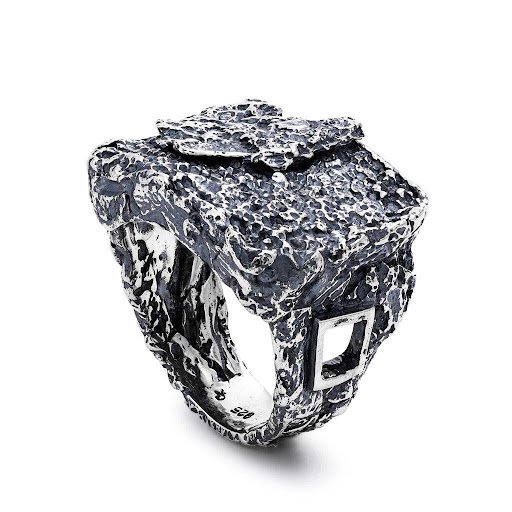
Rings are among the most versatile accessories because they can be worn alone or combined with other pieces.
A simple silver ring may suit everyday use, while a wide sculptural ring can create a stronger visual statement. Textured surfaces and unusual shapes can add character without requiring a large gemstone.
When choosing a ring, pay attention to sizing, weight, interior smoothness, and the possibility of adjustment. Some designs cannot be resized easily, particularly when they include stones, complex patterns, or unusual construction.
Bracelets and Cuffs

Bracelets and cuffs can make a design more noticeable because they occupy a visible position on the wrist.
A narrow bracelet may work well for understated styling, while a broad cuff can become the main accessory in an outfit. Textured metal and sculptural shapes can make these pieces interesting even when they use a limited color palette.
Comfort is especially important. Check the internal diameter, opening, weight, and fit around the wrist. A cuff that is too tight may be uncomfortable, while one that is too loose may move excessively or catch on clothing.
Do not repeatedly bend a rigid cuff to adjust its size unless the maker confirms that it is designed for that purpose. Repeated bending can weaken or damage metal.
Necklaces and Pendants
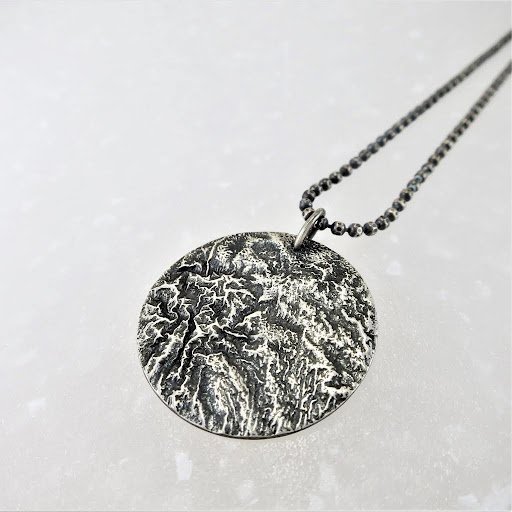
Necklaces and pendants can draw attention to the neckline and work with a variety of clothing styles.
A small pendant may provide a subtle finishing touch, while a larger pendant can act as a focal point. The length of the chain, the weight of the pendant, and the material of the clasp all affect the wearing experience.
If a pendant contains stones or intricate metalwork, examine the setting and attachment points. These areas may be vulnerable to damage if the jewelry catches on clothing or is handled roughly.
Earrings
Earrings can introduce texture and visual interest without requiring a large accessory.
When evaluating earrings, consider their weight, fastening mechanism, material composition, and suitability for your ears. People with metal sensitivities should check the components that contact the skin instead of assuming that a silver-colored finish guarantees suitability.
If a particular brand’s available range has not been verified, confirm the actual products offered before assuming that earrings or any other specific category belong to its collection.
Is Tsunaihaiya Jewelry Handmade?
This question matters because handmade jewelry and factory-produced jewelry can differ in their production methods, consistency, repair options, and pricing.
Descriptions associated with Tsunaihaiya emphasize craftsmanship and individual finishing. However, production methods may vary between pieces, and a general description of a brand is not sufficient evidence that every item is entirely handmade.
What Handmade Jewelry Usually Means
Handmade jewelry generally involves meaningful direct work by an individual maker or artisan during the creation of the piece.
This work might include shaping metal, soldering components, setting stones, hammering surfaces, polishing, or completing other finishing steps.
Some artisans make every component by hand. Others combine hand-finishing with casting, specialized equipment, or commercially manufactured parts. These approaches are not necessarily equivalent, so clear product information matters.
How to Evaluate Craftsmanship
Look for detailed photographs showing the front, back, sides, clasp, and other important areas of the item.
A reliable product description should explain the material, approximate dimensions, weight where relevant, finish, and any stones or additional components.
If the seller describes an item as handcrafted, ask what parts of the process are performed by hand. If the item is presented as part of a cultural collaboration, look for clear information about the participating artists and the design’s background.
No single feature proves authenticity. A handmade appearance, irregular surface, or attractive package should be considered alongside provenance and seller credibility.
Read more: TechTrendery.com: What Is It, What Does It Offer, and Is It Worth Exploring?
Does Handmade Always Mean Better Quality?
Not necessarily.
Handmade jewelry may offer distinctive details and a closer connection to the maker’s creative process. However, quality still depends on material selection, construction, finishing, and appropriate maintenance.
Well-manufactured jewelry can also be durable and attractive. Conversely, a handmade item may have weaknesses if its construction is poor or its materials are unsuitable for the intended use.
The better question is whether the particular piece is well made, accurately described, and appropriate for the buyer’s needs.
How to Check Whether Tsunaihaiya Jewelry Is Authentic
Anyone considering a purchase should evaluate authenticity before focusing on appearance or price. This is especially important when a product is marketed as a distinctive designer piece or is associated with a particular artistic tradition.
There is no single visual feature that can establish authenticity in every case. A careful assessment uses several independent indicators.
1. Examine the Seller
Look for a seller with a clear business identity, detailed contact information, transparent policies, and a history that can be independently checked.
Be cautious when a listing provides little information about the business or uses vague descriptions without identifying the actual product.
2. Verify the Product Details
Read the material specifications carefully. Terms such as sterling silver, silver-plated, solid silver, and silver-colored metal do not mean the same thing.
Check dimensions, weight, stone descriptions, finish, and any available identifying marks.
If important details are missing, request clarification before paying.
3. Review Product Photographs
Look for multiple photographs of the actual item rather than relying exclusively on polished promotional images.
Close-up photographs can reveal the finish, construction, stone placement, and condition. For secondhand pieces, request photographs of marks, worn areas, repairs, and any damage.
Professional photography alone does not prove that an item is genuine.
4. Ask for Provenance
Provenance refers to information about an item’s origin, ownership, and history.
For a new product, this may include documentation from an authorized seller or manufacturer. For a secondhand piece, it may include an original receipt, previous ownership information, or other relevant records.
The available documentation will vary, so evaluate it in context rather than expecting every item to have an identical set of papers.
5. Understand the Return Policy
A clear return policy reduces the risk of purchasing an item that differs significantly from its description.
Check the return window, conditions, shipping responsibility, and process for resolving disputes. If the seller makes specific claims about authenticity, determine whether those claims are supported by a meaningful written guarantee.
6. Be Careful With Unusually Low Prices
A low price does not automatically mean that a product is counterfeit, and a high price does not guarantee authenticity.
However, an offer that appears dramatically cheaper than comparable documented items deserves additional scrutiny. Consider the condition, materials, seller history, and whether the product is new, used, damaged, or an imitation.
The safest decision is based on verifiable information rather than urgency or marketing language.
How to Care for Tsunaihaiya-Style Jewelry
Proper care helps preserve the appearance and condition of jewelry, especially when it contains silver, gemstones, or mixed materials.
The correct method depends on the exact composition and finish of the piece. A cleaning method that works for plain sterling silver may damage a delicate stone, protective coating, or intentionally darkened surface.
Clean Silver Carefully
For suitable sterling silver jewelry, use a soft polishing cloth and gentle movements. Avoid aggressive rubbing, particularly on pieces with textured surfaces or intentional oxidation.
Do not assume that every darkened area is tarnish. Some designs use contrasting finishes to emphasize details, and excessive polishing may remove that effect.
For jewelry with gemstones, mixed materials, or special finishes, follow the maker’s care instructions.
Store Each Piece Properly
Store jewelry in a dry place away from direct sunlight and excessive humidity. A soft pouch or lined jewelry box can reduce scratches caused by contact with other accessories.
Separate silver pieces from harder jewelry, especially items with sharp edges or exposed gemstones. If possible, keep individual pieces in separate compartments.
Avoid Harsh Chemicals
Perfume, hairspray, household cleaning products, and some cosmetics can affect certain jewelry materials.
A practical routine is to put on jewelry after applying cosmetics and remove it before swimming, cleaning, exercising, or using products that may damage the finish.
Handle Gemstones and Leather With Care
Some gemstones are more sensitive to chemicals, sudden temperature changes, or abrasion than others. Leather and other nonmetal components also require different maintenance from silver.
When the material is uncertain, avoid soaking the entire piece or using strong cleaning solutions. Ask the seller or a qualified jeweler for advice based on the specific item.
Why Is Tsunaihaiya Gaining Attention Online?
Unusual words often attract search interest because people want to understand something they have encountered without enough context.
Tsunaihaiya is particularly interesting because online descriptions connect it with several topics, including jewelry, cultural heritage, symbolism, and creative expression. This variety gives readers several reasons to investigate the term.
Curiosity About Unfamiliar Words
People frequently search for unfamiliar expressions after encountering them in an article, social media post, product listing, or online discussion.
When a term lacks an obvious definition, readers may search for its meaning, pronunciation, and origin. If different pages offer conflicting explanations, curiosity can increase further.
However, search visibility does not prove that a term is historically important, culturally established, or widely used.
Interest in Distinctive Jewelry
Consumers increasingly encounter jewelry through online product photography, independent designers, and discussions about craftsmanship.
An unusual name connected with distinctive metalwork can encourage people to investigate the designer, the materials, and the story behind a product.
For interested buyers, the most useful information is not simply whether the name is popular. It is whether the item has a documented origin, reliable material specifications, and a design that suits their preferences.
Search Engines and Repeated Content
Another reason unfamiliar terms can become visible online is that publishers create explanatory articles around emerging search phrases.
When multiple pages repeat similar claims, those claims may appear more established than they actually are. Yet repetition does not provide independent evidence.
Readers should therefore distinguish between the number of pages discussing Tsunaihaiya and the quality of the evidence supporting each explanation.
Is Tsunaihaiya a Japanese Word or an Apache Expression?
This is one of the most important questions to answer carefully.
The name is associated in some brand descriptions with a relationship between Japanese design and Apache artistic heritage. Some explanations also attribute an Apache-language meaning to the expression and connect it with Japan or the rising sun.
Nevertheless, the precise translation and linguistic origin should not be presented as conclusively established without reliable language documentation.
A cultural association does not automatically establish that a name is a standard word in either language. Similarly, the involvement of a Japanese designer does not prove that the name itself originated in Japanese.
To evaluate these claims, look for the original expression, an authoritative translation, information about the people who use it, and credible documentation explaining its historical context.
This approach avoids two common mistakes: dismissing a culturally significant expression simply because it is unfamiliar, and assigning a traditional meaning without sufficient evidence.
Can Tsunaihaiya Be Used as a Brand Name?
Tsunaihaiya’s distinctive spelling may appeal to people developing a creative project, product line, artistic identity, or business.
Unusual names can be memorable, but selecting a name for commercial use requires more than finding an expression that sounds distinctive.
Check Existing Uses
Search for the exact spelling, similar spellings, and related names used by existing businesses. This can help identify potential confusion with established products or brands.
Also consider whether the name has cultural associations that should be understood before using it commercially.
Review Trademark Availability
A name’s absence from a general search does not prove that it is legally available.
Before using Tsunaihaiya for a commercial project, check the relevant trademark databases and seek qualified legal advice where appropriate. Trademark rights can vary by country, product category, and existing registration.
Choose a Clear Brand Meaning
If a business uses an unfamiliar or newly coined name, it should explain what the name represents.
A clear explanation helps customers understand the product and prevents invented meanings from being mistaken for established cultural facts.
For a brand inspired by particular artistic traditions, transparent information about the designers, materials, and creative process is especially valuable.
Common Misconceptions About Tsunaihaiya
Several misunderstandings can arise when a term has multiple online explanations.
Misconception 1: Tsunaihaiya has one universally confirmed definition.
Its precise meaning is not established consistently across the available explanations. Some sources offer symbolic interpretations, while others connect the name with jewelry and cultural collaboration.
Misconception 2: Every interpretation found online is historically accurate.
An article may repeat an earlier claim without independently verifying it. A credible explanation should distinguish documented facts from personal interpretation.
Misconception 3: A connection with Japanese design proves Japanese linguistic origin.
Design influence and language origin are separate matters. One does not establish the other.
Misconception 4: Every piece associated with the name is handmade from sterling silver.
Product materials and manufacturing methods can vary. Buyers should check the specifications of each individual item.
Misconception 5: Expensive jewelry is always authentic.
Price is only one factor. Seller credibility, documentation, materials, condition, and provenance are also important.
Misconception 6: Cultural symbolism can be assumed from appearance alone.
A sun-like pattern or geometric shape does not automatically have a particular traditional meaning. Reliable information about the design and its creator is needed before assigning a cultural interpretation.
Who Might Be Interested in Tsunaihaiya?
Tsunaihaiya may interest several groups of readers, depending on the context in which they encounter the name.
- Jewelry enthusiasts: People interested in distinctive silverwork, sculptural accessories, and unusual designs.
- Collectors: Buyers who want to understand an item’s maker, provenance, materials, and production history.
- Cultural researchers: Readers exploring the relationship between artistic traditions, cultural identity, and contemporary design.
- Fashion enthusiasts: People who prefer accessories that express individual style rather than simply follow trends.
- Writers and researchers: Anyone investigating unfamiliar terms and trying to separate reliable information from unsupported explanations.
- Creative entrepreneurs: Individuals researching unusual names and the practical considerations involved in branding.
The most appropriate way to approach Tsunaihaiya depends on your purpose. Someone researching language should prioritize linguistic evidence, while someone considering a jewelry purchase should focus on product documentation and quality.
Frequently Asked Questions About Tsunaihaiya
1. What is Tsunaihaiya?
Tsunaihaiya is an uncommon term associated online with distinctive jewelry, artistic expression, and a reported connection between Japanese design and Apache artistic heritage. Its precise linguistic meaning is not universally established.
2. What does Tsunaihaiya mean in English?
There is no consistently verified English translation established by the available information. Some brand-related descriptions associate the name with an Apache expression connected with Japan and the rising sun, but the precise translation requires authoritative linguistic confirmation.
3. Is Tsunaihaiya a real word?
The term is used in online discussions and brand-related contexts. However, its status as a traditional word with a specific linguistic origin requires separate verification. A name can be used meaningfully without having a standard dictionary definition.
4. Is Tsunaihaiya Japanese?
A Japanese linguistic origin has not been conclusively established. The name is associated with Japanese design through its reported artistic background, but that association should not be confused with proof that it is a Japanese word.
5. Is Tsunaihaiya connected to Apache culture?
Some descriptions associate the name and its jewelry with Apache artistic heritage. The reported collaboration involving Apache artisan Craig Dan Goseyun and Japanese designer Yusuke Kuwano is part of this context. Specific cultural and linguistic claims should be checked against reliable documentation.
6. Is Tsunaihaiya a jewelry brand?
The name appears in discussions of a distinctive jewelry brand associated with Japanese and Apache influences. For current product availability, ownership details, and official specifications, buyers should verify the relevant brand information.
7. What materials are associated with Tsunaihaiya jewelry?
Descriptions of pieces associated with the name mention silverwork, natural stones, and mixed materials. The composition varies by item, so buyers should check whether a particular product uses sterling silver, plated metal, specific gemstones, or other materials.
8. Is Tsunaihaiya jewelry handmade?
Descriptions emphasize craftsmanship and individual finishing, but manufacturing methods may differ between products. Check the details of the specific item before assuming that it is entirely handmade.
9. How can I check whether a Tsunaihaiya item is authentic?
Review the seller’s reputation, material specifications, photographs, available documentation, provenance, and return policy. No single visual feature or price point can establish authenticity on its own.
10. How should I clean Tsunaihaiya silver jewelry?
If the item is suitable for conventional silver care, a soft polishing cloth may help maintain its appearance. Avoid abrasive cleaners and aggressive polishing on textured, oxidized, or gemstone-set pieces. Follow the maker’s instructions whenever possible.
11. Why is Tsunaihaiya difficult to define?
Different online explanations discuss the name in different contexts, and a consistently documented linguistic origin is not readily established. The most reliable approach is to examine the context and evidence behind each claim.
12. Does Tsunaihaiya symbolize sunrise?
Some descriptions associate the name with the rising sun. Sunrise can also serve as a broader symbol of renewal and new beginnings, but these symbolic associations should not be confused with a verified literal translation.
13. Is Tsunaihaiya suitable for everyday jewelry?
That depends on the particular design, materials, construction, and comfort. Before wearing any piece daily, consider its weight, finish, setting, durability, and care requirements.
14. Can Tsunaihaiya be used as a business name?
Potentially, but commercial use requires checking existing businesses, relevant trademarks, and possible cultural associations. A distinctive spelling alone does not guarantee that a name is available for registration.
15. How can I research Tsunaihaiya more accurately?
Start by identifying where the term appeared. For linguistic claims, seek credible dictionaries and language specialists. For jewelry, examine product documentation, maker information, and material specifications. Treat unsupported interpretations as possibilities rather than established facts.
Final Thoughts on Tsunaihaiya
Tsunaihaiya is an intriguing subject because its online identity brings together questions about language, cultural heritage, jewelry, and contemporary artistic expression. Its reported association with Japanese design and Apache craftsmanship offers a useful starting point for understanding the name, particularly for readers interested in distinctive accessories and the stories behind creative work.
At the same time, it is important to distinguish documented information from interpretations that circulate online. The exact linguistic meaning of Tsunaihaiya should not be treated as settled without reliable evidence, and symbolic associations with sunrise, unity, or renewal should be described carefully rather than presented as unquestionable translations.
For jewelry enthusiasts, the practical priorities are equally clear: investigate the maker, verify the materials, examine the craftsmanship, and evaluate the seller before purchasing a specific piece. For researchers, the priority is to identify reliable sources that establish how the term is used and what its cultural or linguistic connections actually mean.
Ultimately, understanding Tsunaihaiya involves more than finding a short definition. It means examining the context behind the name, appreciating the artistry associated with it, and approaching cultural claims with curiosity and respect. That balanced perspective provides a more useful and trustworthy understanding of Tsunaihaiya than an explanation based on speculation alone.






One Comment